

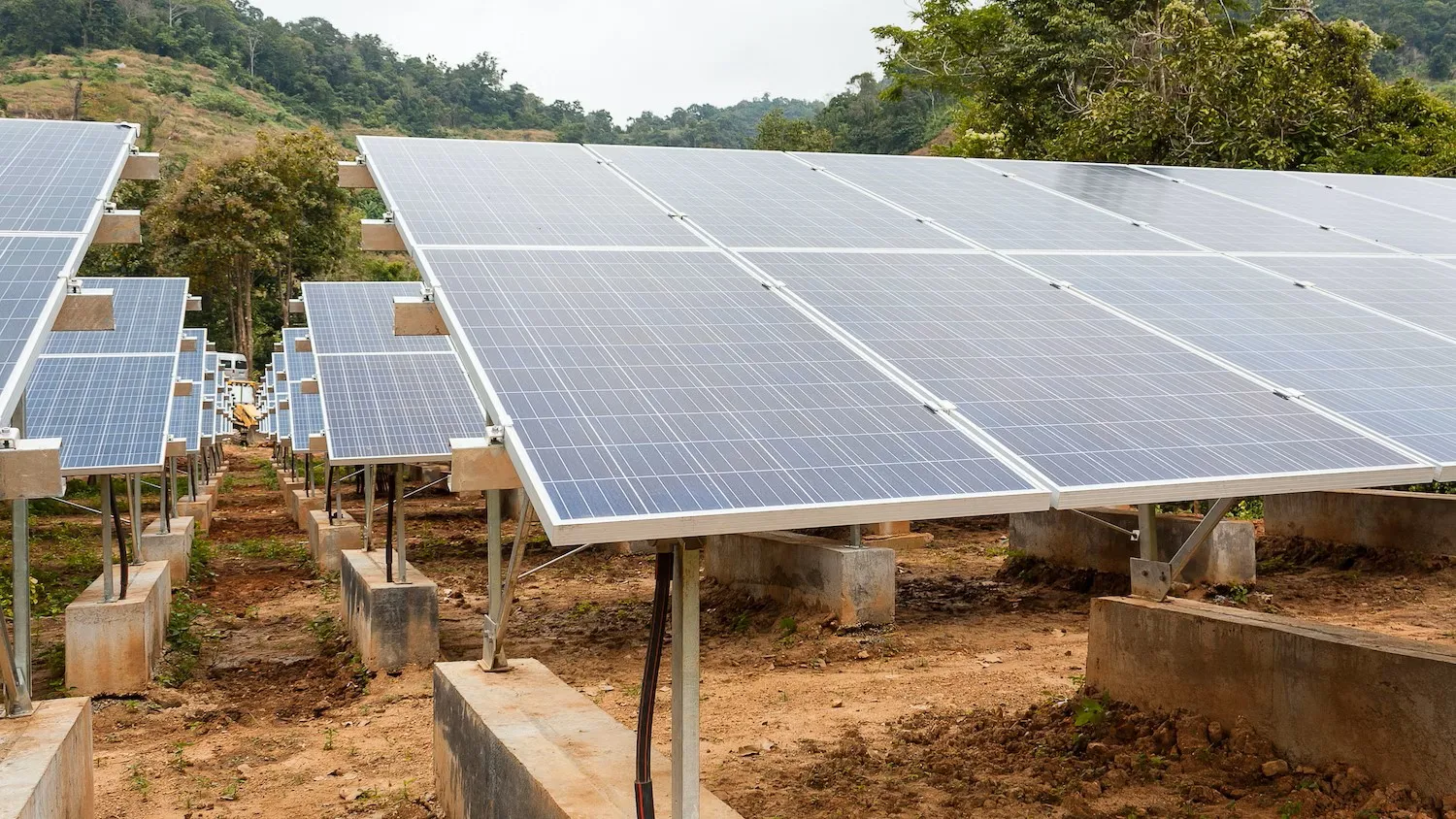
ABUJA — In a major move to dismantle “energy poverty,” the Federal Government of Nigeria officially rolled out the Distributed Access through Renewable Energy Scale-up (DARES) project on Friday, March 6, 2026. Spearheaded by the Rural Electrification Agency (REA), the initiative pairs $750 million in World Bank funding with an expected $1.1 billion in private sector capital—totaling a massive $1.85 billion investment in Nigeria’s renewable future.
This program is being hailed as the world’s largest publicly funded renewable energy project, specifically designed to bypass the limitations of the national grid.
Decentralizing the Grid: 1,350 Mini-Grids
The REA’s strategy shifts the focus from large-scale, centralized power plants to decentralized “mini-grids.” These systems are faster to build, easier to maintain, and capable of reaching remote areas where extending the national transmission lines is economically unfeasible.
Key Technical Milestones:
-
Isolated Mini-Grids: 1,100 units serving purely rural and remote communities.
-
Interconnected Mini-Grids: 250 units integrated into the national grid to stabilize power in peri-urban areas.
-
Stand-alone Solar Kits: Over 1 million sales of home energy systems to replace polluting petrol generators.
-
Institutional Solar: Dedicated systems for federal universities, teaching hospitals, and security agencies like the EFCC and DSS.
Impact: Powering 17.5 Million Lives
According to REA Director General Abba Aliyu, the project is “existential” for Nigeria’s economic recovery. Currently, over 38% of the population (roughly 88 million people) lacks reliable electricity, a gap typically filled by expensive, noisy diesel generators.
Project Outcomes for 2026–2030:
-
Lives Impacted: 17.5 million Nigerians gained new or improved access.
-
Business Growth: Powering 237,000 MSMEs, including barbers, tailors, and agro-processors.
-
Environmental Health: Replacing over 280,000 fossil-fueled generator sets.
-
Gender Inclusion: Over 500,000 female-headed households prioritized for connection.
The “DARES” Financing Model
The project is structured to ensure sustainability by making “energy decisions make financial sense.” Unlike previous government-only projects, DARES uses public funds to “de-risk” the sector, encouraging global investors from the U.S., UK, and China to participate.
“For the first time, we are witnessing a structured national effort to address electricity access,” Aliyu noted. “We have learned from the mistakes of the main grid; every mini-grid now includes 100% metering and a remote monitoring system (SCADA) accessible via smartphone.”
