

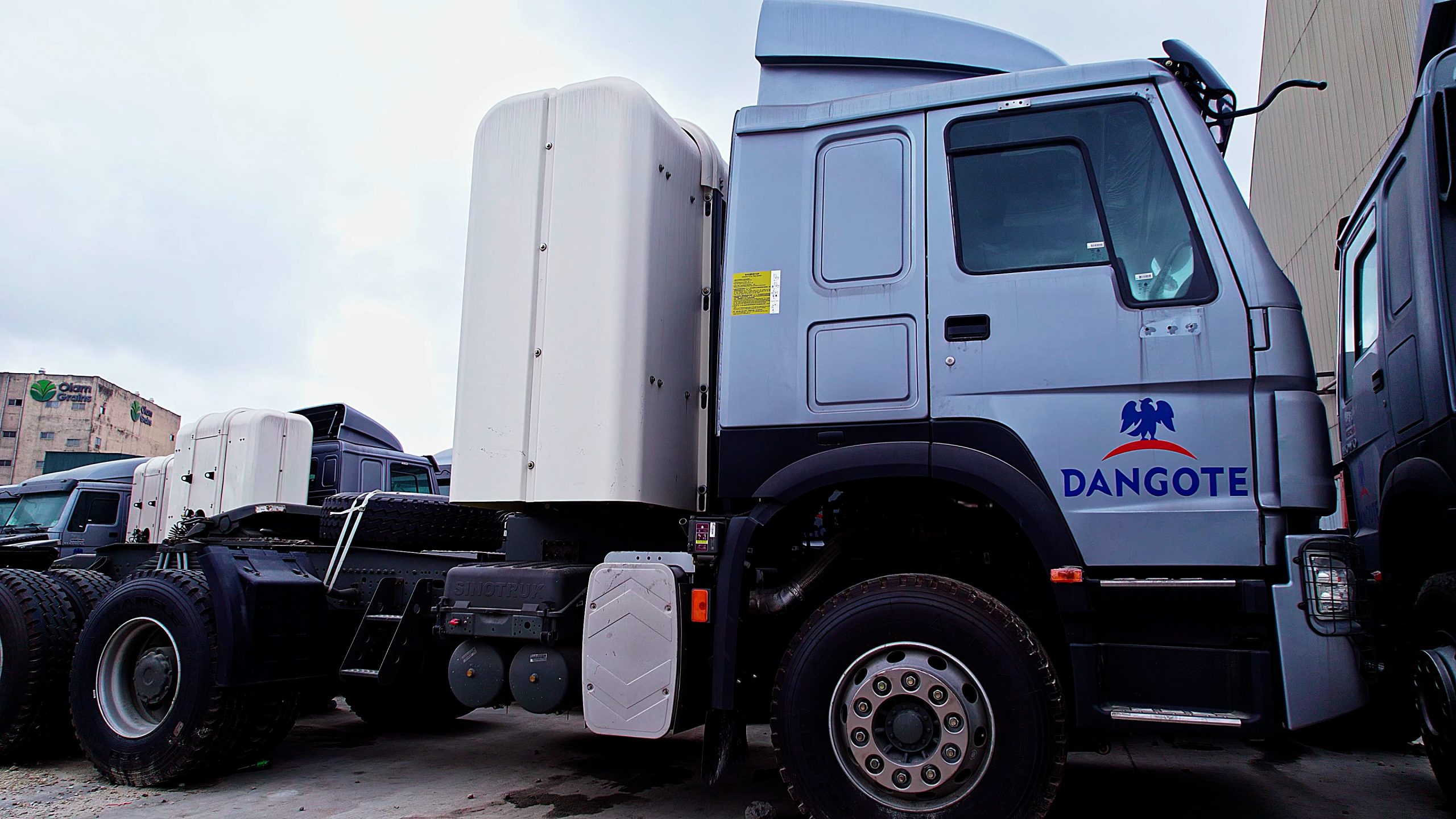
Aliko Dangote has revealed a surprising roadblock stalling his ambitious 4,000-truck CNG fleet: a simple security seal. Despite an astronomical investment in gas-powered logistics, hundreds of trucks remain stationary at the Lekki refinery because the specialized sealing mechanisms required to prevent driver theft haven’t arrived from overseas.
The Vulnerability of the Open Road
The delay highlights a gritty reality of the Nigerian downstream sector—product diversion. Dangote explained that without these high-security seals, drivers often “help themselves” to the fuel during transit.
“The main issue and the problem that we have is that those seals are not yet here… otherwise, the drivers take some of it as their own share.”
A Critique of “Antiquated” Logistics
Beyond the immediate hardware shortage, Dangote used the press briefing to call for a “major revolution” in how Nigeria moves energy. He noted that Nigeria’s reliance on thousands of trucks for long-distance haulage is an anomaly on the continent.
-
The African Standard: Many Eastern and Southern African nations utilize functional pipelines for bulk fuel transport.
-
The Nigerian Crisis: Domestic pipelines have been largely neutralized by vandalism and decay, forcing the industry into an expensive and inefficient trucking model.
Economic Stakes for 42 Million Small Businesses
The stakes for this rollout are immense. The CNG fleet is the backbone of a plan to bypass expensive middlemen and deliver fuel directly to consumers at lower costs.
While Chinese shipping bottlenecks initially slowed the delivery of the trucks themselves, this new “seal crisis” represents the final hurdle in a ₦720 billion attempt to crash pump prices across Nigeria.
