

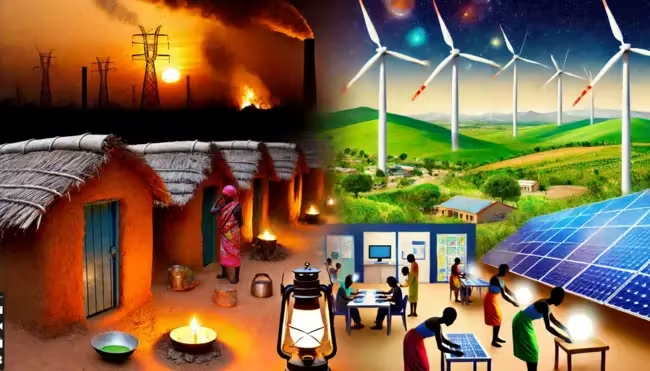
If Nigeria is to secure its position as the undisputed energy powerhouse of Africa, it must shift from a decade-long planning cycle to a 36-month execution window. This is the core message from seasoned energy expert Canice Emeka, who has outlined a strategic roadmap consisting of seven non-negotiable steps to revitalize the nation’s power sector and turn it into a multi-billion dollar export engine.
The strategy focuses on eliminating “estimated billing,” professionalizing distribution, and leveraging Nigeria’s potential as a regional energy hub.
The 36-Month Metering Challenge
One of the most significant bottlenecks in the current system is the “metering gap,” where over 65% of consumers are unmetered. This leads to estimated billing, which fuels systemic theft and consumer distrust. Emeka proposes a radical acceleration:
-
Current Timeline: 10 years
-
Proposed Timeline: 36 months
-
The Solution: Adopt vendor-financed models where meter providers install units at no upfront cost to Distribution Companies (DisCos). By utilizing performance-based contracts—where failing providers lose their licenses—Nigeria could achieve 85% metering by 2028.
Fiscal Discipline and Infrastructure Reinvestment
Emeka argues that no serious energy economy can afford universal subsidies. He advocates for:
-
Cost-Reflective Tariffs: Eliminating subsidies for high-consumption groups (Bands A and B) and redirecting those savings toward power infrastructure.
-
Reliability Over Subsidy: Observations suggest that consumers prefer a “Reliable Band A” tariff over the expensive “Diesel Hybrid-mix” necessitated by unreliable power.
-
Targeted Lifelines: Maintaining subsidies only for the most vulnerable consumers to ensure social equity while the broader market stabilizes.
Nigeria as a West African Energy Hub
Beyond domestic stability, the expert sees a massive opportunity for foreign exchange earnings through a deliberate export strategy. By backing energy exports with sovereign guarantees and “take-or-pay” clauses, Nigeria could earn $3–5 billion annually by 2035. This would not only boost the economy but also strengthen regional integration within ECOWAS.
