

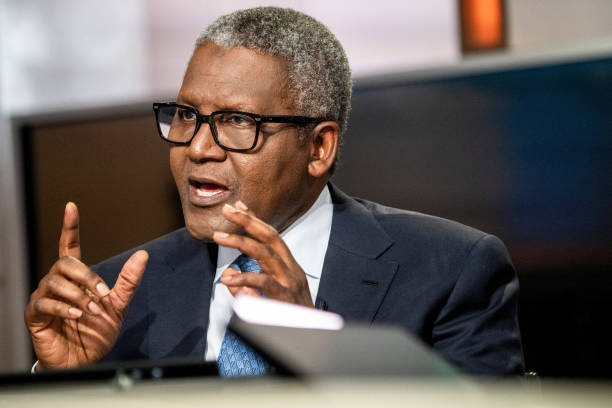
Nigeria’s largest industrial investment, the Dangote Refinery, is locked in a fierce dispute with the nation’s energy regulators, with owner Aliko Dangote publicly accusing them of policies that favor foreign industry over domestic capacity. Dangote stated that the continuation of cheap fuel imports, facilitated by current regulations, is actively being used “to checkmate domestic potential,” threatening jobs, investment, and the country’s long-term energy security.
Speaking at the 650,000-barrel-per-day facility in Lagos, Dangote lamented that Nigeria—Africa’s biggest oil producer—continues to rely heavily on imports, creating jobs abroad while hindering local industrialization efforts.
Dispute Over Capacity and Crude Supply
The core of the conflict lies in two key areas: crude supply and local output capacity versus import need.
-
Crude Supply Guarantee: Dangote alleges that the Nigerian Midstream and Downstream Petroleum Regulatory Authority (NMDPRA) has failed to enforce a critical rule that guarantees crude oil supply to local refiners before crude is exported. The refinery, which currently imports 100 million barrels of crude annually, has been unable to secure all the required domestic crude.
-
Capacity Distortion: The regulator recently urged the President to drop plans to ban refined product imports, arguing that local output cannot meet the national demand of 55 million liters daily. Dangote strongly disputes this, accusing the regulator of deliberately distorting the refinery’s actual capacity by reporting offtake statistics instead of genuine production data.
Call for Inquiry and The Regulator’s Defense
Escalating the dispute, Dangote specifically called for an official inquiry into Farouk Ahmed, the head of the NMDPRA, citing concerns over his management of the sector.
Ahmed, who did not immediately comment on the inquiry demand, has previously suggested that the Dangote refinery is attempting to secure a monopoly on petroleum product sales, a claim the regulator uses to justify continued imports.
Despite these regulatory hurdles, Dangote vowed to press ahead with expansion plans, declaring his investment is “too big to fail.” He also reiterated plans to list the company on the local stock market and pay dividends in U.S. dollars, aiming to allow “every Nigerian can own a piece of the economy.”
