

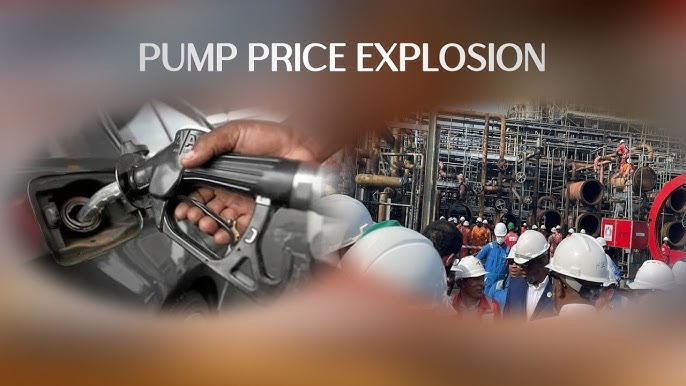
LAGOS — The Centre for the Promotion of Private Enterprise (CPPE) has issued an urgent “survival advisory” to Nigerian businesses and the federal government as global oil prices surge toward $120 per barrel. On Sunday, March 15, 2026, CPPE CEO Muda Yusuf warned that the escalating military conflict involving the United States, Israel, and Iran has triggered a “perfect storm” for Nigeria’s private sector.
With the Strait of Hormuz—the world’s most critical oil chokepoint—effectively closed to tanker traffic, Nigeria is facing a paradoxical crisis: massive government “windfall” revenue alongside a crippling spike in local energy costs.
The “Strait” Jacket: Why Global War Hits Local Pumps
The sudden attack on February 28, 2026, and the subsequent closure of the Strait of Hormuz have removed approximately 20 million barrels per day of oil and gas from the global market.
The Impact on Nigeria (March 2026):
-
Petrol Prices: Jumped from ₦870 to as high as ₦1,300 per litre in major cities like Abuja and Lagos.
-
Diesel Costs: Now exceeding ₦1,600 per litre, directly impacting logistics and manufacturing.
-
Inflationary Pressure: Nigeria’s inflation, already at 24.8% (January 2026), is expected to re-accelerate as transport costs are passed to consumers.
Strategic Survival: CPPE’s Advice to Businesses
Dr. Yusuf emphasized that for many SMEs, the current energy shock is no longer about profit—it is about operational survival.
Key Recommendations for Firms:
-
Energy Efficiency Audit: Undertake a “waste-mapping” exercise to optimize generator hours and deploy energy-efficient machinery.
-
Hybrid Diversification: Move away from 100% petrol/diesel reliance toward Solar-Hybrid systems. While upfront costs are high, the “payback period” has shrunk drastically with ₦1,300 petrol.
-
Cluster Logistics: Shared warehousing and “consolidated deliveries” among businesses in the same industrial zones to reduce fuel consumption per unit.
-
Digital Lean: Maximize remote transactions and digital platforms to reduce the physical movement of staff and goods.
Policy Priorities: A Call to Government
The CPPE noted that while the government expects a ₦30 trillion windfall from high oil prices, this revenue must be channeled into “structural buffers” rather than consumption.
The CPPE “Policy Toolkit” for 2026:
-
Fiscal Incentives: 100% import duty waivers on renewable energy equipment and tax credits for solar installations.
-
Refining Security: Prioritize crude supply to the Dangote Refinery and the Port Harcourt Refinery (recently restarted) to reduce the “import premium” and freight costs.
-
Financing Windows: Create dedicated, low-interest funding for SMEs to transition to gas-powered or solar energy.
“The Strait of Hormuz is the butterfly capable of sparking a tornado as far away as Nigeria,” Yusuf stated. “Resilience will depend on how quickly we can decouple our productivity from expensive fossil fuel imports.”
