

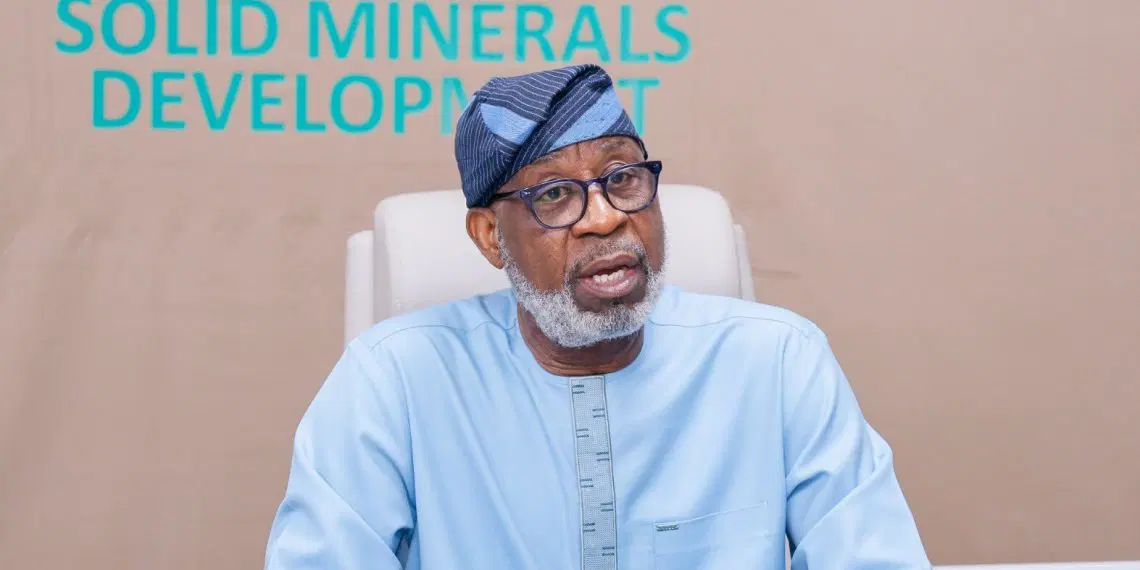
TORONTO — Nigeria is shifting its mining strategy from isolated domestic growth to becoming the “anchor” for a continent-wide mineral corridor. Speaking at the Prospectors and Developers Association of Canada (PDAC) Conference in Toronto, the Minister of Solid Minerals Development, Dele Alake, declared that the future of African mining lies in cross-border infrastructure and local value addition.
Represented by the Director-General of the Mining Cadastre Office, Obadiah Nkom, the Minister addressed global powerhouses—including representatives from France, Saudi Arabia, and Australia—emphasizing that Nigeria is no longer interested in being a mere exporter of raw dirt.
From Frameworks to Functionality
Alake issued a candid critique of the African mining landscape, noting that while the continent has no shortage of policy frameworks, it suffers from a “project stall” at national borders. To fix this, Nigeria is calling on global investors and development finance institutions to fund regional infrastructure systems—rail, power, and processing plants—that link multiple countries.
“Integration does not fail because Africa lacks frameworks. It fails because projects stall between borders,” Alake remarked. “Nigeria is ready to anchor such corridors. We have the data, the reforms, and the political backing. What we need now is capital structured for integration.”
The “Value Addition” Mandate
A central theme of the Nigerian delegation’s pitch was the mandatory shift toward local processing. The Federal Government is increasingly tightening regulations to ensure that minerals are beneficiated within Nigeria before export. This move is designed to:
-
Boost GDP: Capturing more value from the supply chain.
-
Create Jobs: Moving from manual extraction to high-tech industrial processing.
-
Strengthen Geological Data: Providing investors with “bankable” data that reduces the risk of exploration.
Canada-Nigeria Synergy
On the sidelines of the Toronto summit, the Nigerian delegation held high-level talks with the Canada–Africa Chamber of Business. Facilitated by the Canadian High Commissioner to Nigeria, Pasquale Salvaggio, the discussions focused on:
-
Direct Investment: Connecting Canadian mining tech and capital with Nigerian solid mineral sites.
-
The May Partnership: Finalizing plans for the African Partnership Business Conference in May 2026, which will serve as a matchmaking platform for Canadian executives and African stakeholders.
-
Formalization: Sharing Canadian expertise on formalizing artisanal mining sectors to improve transparency and ESG (Environmental, Social, and Governance) standards.
A Decade of Growth
The Minister noted that these reforms have already begun to bear fruit, with the mining sector recording its strongest decade of growth yet. By strengthening the Mining Cadastre Office and improving the ease of doing business, Nigeria has significantly boosted its profile as a preferred destination for “responsible and sustainable” mining investment.
