

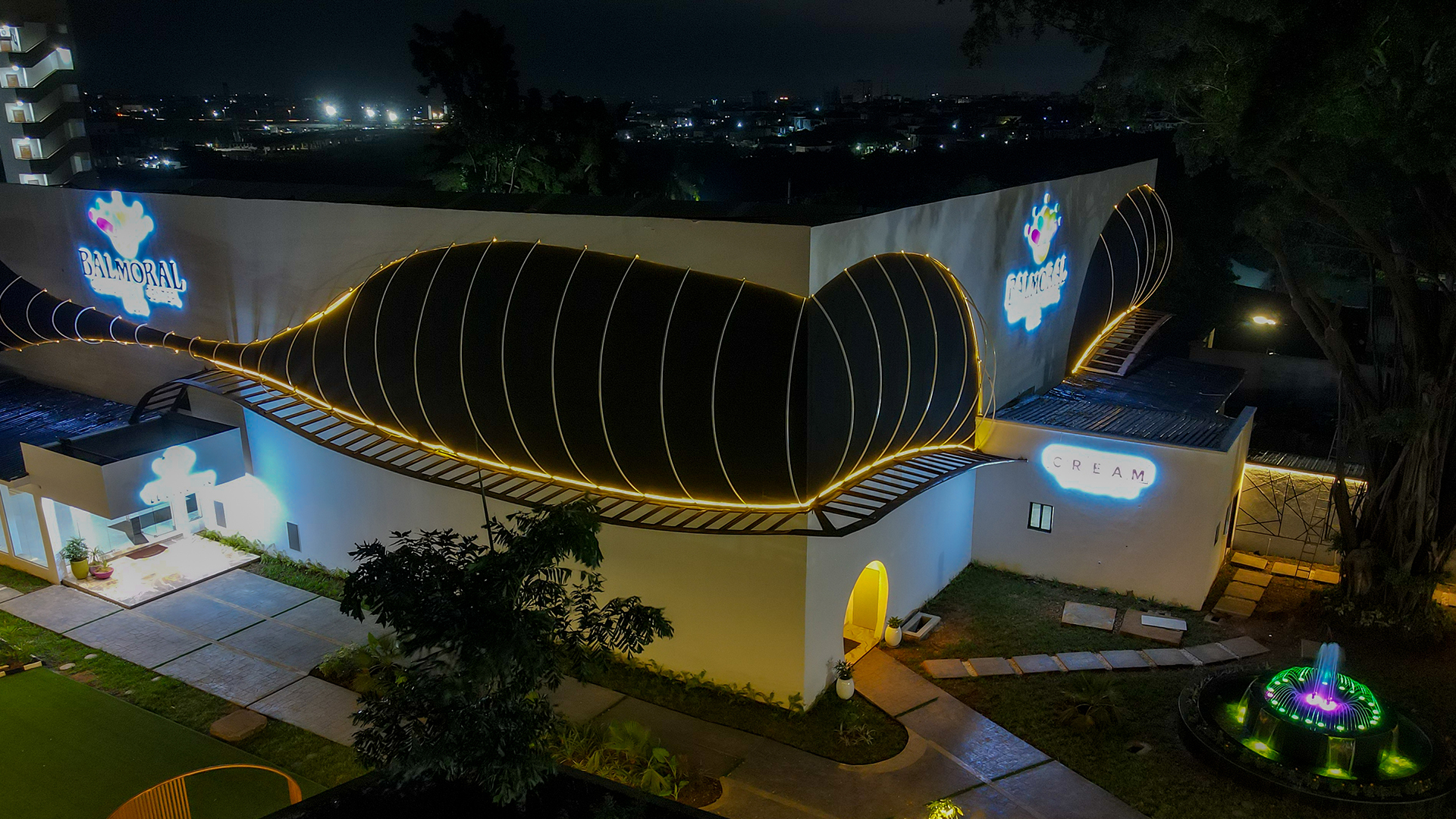
The following summarizes the key insights shared by the founder of Balmoral on transitioning from a corporate career to building a diversified hospitality and live-experience conglomerate in West Africa.
The Founding Insight and Scaling Philosophy
The founder’s core conviction for launching Balmoral was born from recognizing a fundamental market gap: Nigeria had massive demand for world-class experiences but lacked the necessary infrastructure.
-
Defining Insight (2006): The opportunity was not merely running an events company, but creating an end-to-end experience infrastructure company—developing trained personnel and venues built to global standards.
-
Corporate Lessons (Schlumberger): The transition from corporate life instilled crucial operational disciplines: the non-negotiability of systems, data-driven operations, and the ability to build processes that function autonomously.
-
Leadership Pillars in Volatility: The leadership philosophy for navigating Nigeria’s challenging business environment (policy shifts, currency fluctuations, infrastructure deficits) is built on three pillars:
-
Agility: Quick adaptation to market changes.
-
Resilience: Focusing on long-term growth over short-term gains.
-
Stakeholder Value: Treating all parties (customers, staff, partners, regulators) as collaborators.
-
Market Trends and Operational Strategy
Balmoral’s strategy is heavily influenced by deep observation of Nigerian consumer behavior and a commitment to safety and technological adoption.
Consumer Trends Driving Events:
Nigerians are driven by four key behavioral trends that shape Balmoral’s experience design:
-
Immersion: A desire to be fully part of the experience.
-
Community: Events must connect people.
-
Status Expression: Experiences are a form of self-storytelling.
-
Value-for-Money: Ensuring worth across social classes.
Technology and Operations:
Balmoral strategically adopts technology (AR/VR, e-ticketing, analytics) to solve critical business problems:
-
Tackling counterfeit tickets and weak customer data.
-
Improving operational efficiencies and crowd safety.
-
Enhancing transparency and accurate demand forecasting.
Balancing Spectacle and Safety:
The balance between creative ambition and operational realities (power, logistics, safety) is managed using a triangular decision model: Creative Ambition, Operational Feasibility, and Safety Compliance. Safety is non-negotiable and always prioritized over spectacle.
Sector Growth and Policy Needs
The founder highlighted critical areas for growth and the policy reforms necessary to unlock the sector’s full economic potential.
High-Growth Investment Areas:
International investors are most likely to enter the creative sector through:
-
Destination events and sports tourism.
-
Creative festivals and exhibition infrastructure.
Investors require scale, structure, and predictability, making the formalization of the sector crucial for attracting multi-billion-dollar flows.
Policy and Infrastructure Requirements:
To unlock the full potential of Nigeria’s events economy, the following reforms are needed:
-
Modern, world-class event venues.
-
Clear regulatory frameworks for safety and licensing.
-
Creative industry incentives, similar to those provided for the tech sector.
The founder identified the most impactful reforms for the hospitality business as:
-
Unified national safety codes.
-
Single-window licensing (streamlining approvals).
-
Tax incentives for creative infrastructure.
-
Government-backed insurance schemes.
Future Focus: Sportainment and Talent
Balmoral is placing a growing focus on Sportainment (the intersection of sports, music, gaming, and urban culture), recognizing it as the next major frontier due to Africa’s youthful population (nearly 60% under 25).
-
Global Exportability: African-born events can be globally exported by ensuring a universal story, operational excellence, scalable commercial structures, and partnering with international distribution networks.
-
Talent Gaps and Training: The Balmoral School of Events addresses skills gaps in technical production, safety management, venue operations, and experiential design.
-
Professional Workforce: An export-ready events workforce is defined by a mindset that is process-driven, digitally fluent, safety-conscious, customer-obsessed, and creatively intelligent.
Advice for Young Entrepreneurs:
The critical advice for transitioning from “hustle culture” to structured entrepreneurship is: Hustle starts a business; structure sustains it. Entrepreneurs must build processes, document work, and create systems that can outlive them.
The founder also noted that the conversion of Balmoral venues into COVID-19 isolation centers proved that infrastructure must be flexible and that CSR is most impactful when it leverages core business competencies.
