

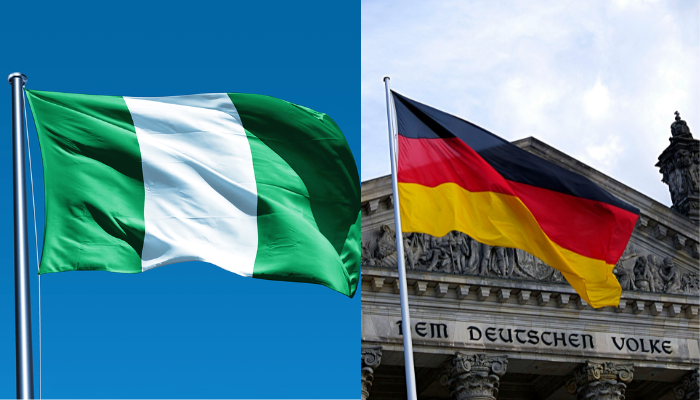
While local headlines focus on Nigeria’s industrial and oil ambitions, the international stage is shifting rapidly. From high-level phone calls between Abuja and Berlin to fiscal warnings in Paris and trade tensions in Madrid, here is the global context affecting the 2026 economic landscape.
Nigeria & Germany: Reviving the Power Dream
In a pivotal nine-minute phone call on Wednesday, President Bola Tinubu and the newly inaugurated German Chancellor, Friedrich Merz, resolved to breathe new life into the stalled Presidential Power Initiative (PPI).
The deal, which involves the German conglomerate Siemens, aims to overhaul Nigeria’s fragile power-transmission network. Chancellor Merz pledged that Siemens is ready to assist, with Deutsche Bank positioned to provide the necessary financing.
Strategic Security Addition: Beyond electricity, Tinubu requested Germany’s assistance in acquiring used helicopters to bolster intelligence and reconnaissance missions in the volatile Sahel region. Merz expressed shared concern over the security situation, signaling a deepening of the 65-year diplomatic relationship between the two nations.
France: The Audit Office Issues a “Red Alert” on Spending
In Paris, the Cour des Comptes (National Audit Office) has issued a stern warning: France can no longer tax its way out of debt. Facing a second consecutive year of strained public accounts, the audit office urged the government to shift decisively toward spending cuts.
-
The 5% Target: The government’s 2026 deficit target of 5% of GDP is described as “highly uncertain.”
-
Tax Fatigue: With the highest tax burden in the euro zone, further hikes risk damaging competitiveness.
-
The Debt Clock: Even if targets are met, France’s national debt is projected to climb to 118.6% of GDP, leaving the country vulnerable to rising interest rates.
UK vs. EU: The “Made in Europe” Trade Barrier
A new diplomatic friction has emerged between London and Brussels. Nick Thomas-Symonds, Britain’s minister for EU relations, warned that the European Commission’s upcoming “Made in Europe” plan could severely damage integrated supply chains.
The EU legislation, expected next week, will require a minimum share of products in strategic sectors (like green tech and defense) to be manufactured within the bloc to receive public funding.
The UK’s Concerns:
-
Increased Costs: Strict “Buy European” requirements could create unnecessary barriers to trade.
-
Supply Chain Disruption: Key UK-EU industries, particularly the UK-Spain link, could face significant delays and higher prices.
-
Protectionism vs. Resilience: While the EU claims the move is about “structural resilience,” London views it as a slide toward isolationism.
