

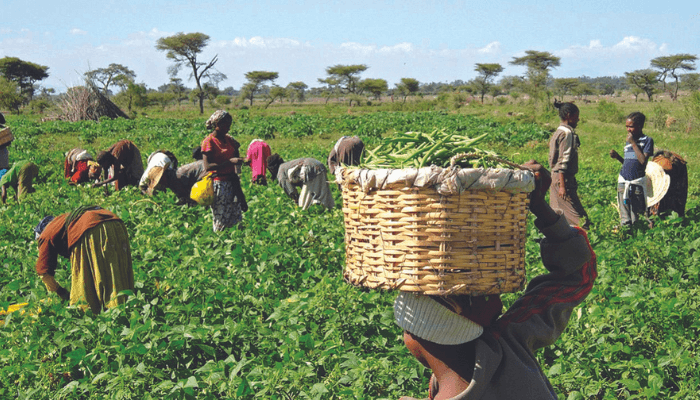
The narrative of rural agricultural failure, often blamed on poor yields, frequently overlooks the true systemic hurdle: financial exclusion. The success of Lydia, a cassava farmer in Ogun State, Nigeria, serves as a powerful case study demonstrating how targeted financial literacy, paired with accessible microcredit, can fundamentally transform a subsistence operation into a commercial value-added enterprise.
Lydia’s trajectory from a struggling smallholder to a farmer-processor embodies the potential of holistic financial inclusion supported by initiatives like the German-funded Global Project Promotion of Agricultural Finance (GP AgFin).
The Intervention: Shifting Mindset and Mitigating Risk
Before receiving support, Lydia faced common obstacles: a crippling lack of capital, minimal market exposure, and, critically, a fear of formal debt. The turning point was her participation in the Farmer Financial Cycle (FFC) training. This program introduced practical tools, including:
-
Cost Tracking and Income Planning: Moving the business from guesswork to disciplined financial management.
-
Risk Awareness: Demystifying credit and proving that loans are scalable tools for growth, not exclusive to “big businesses.”
Armed with this knowledge, Lydia secured her first collateral-free loan through LAPO Microfinance Bank, requiring only two guarantors—a model essential for women agripreneurs who often lack title deeds.
Scaling Up: From Acreage to Value Chain Control
Lydia’s initial loan was catalytic:
-
Production Expansion: She expanded her cassava farm five-fold, from one acre to five acres.
-
Market Guarantee: She secured a stable contract farming agreement with Premium Cassava Products Limited (PCPL), a subsidiary of Flour Mills of Nigeria, eliminating market uncertainty.
The FFC training directly translated into rapid repayment cycles. Having successfully repaid her initial cassava loan in ten months, she demonstrated high financial discipline by repaying a subsequent tomato farming loan even faster.
The Processor Advantage: Investing in Independence
With profits earned and creditworthiness established, Lydia transitioned from merely selling raw produce to value addition. She invested strategically in a 12-step dehydrator, allowing her to process her own cassava harvest.
This investment yielded three critical benefits:
-
Increased Efficiency: Reduced post-harvest losses.
-
Improved Quality: Ensured a higher-quality final product.
-
Higher Income and Independence: She captured more of the value chain, leading to higher profitability and less reliance on fluctuating commodity prices.
Lydia’s financial independence has ripple effects beyond her business. She now contributes equally to household expenses, altering household decision-making and inspiring other women in her rural community to overcome their own barriers to growth. Her story underscores that access to finance, when paired with financial knowledge, acts as the ultimate catalyst for rural economic empowerment.
