

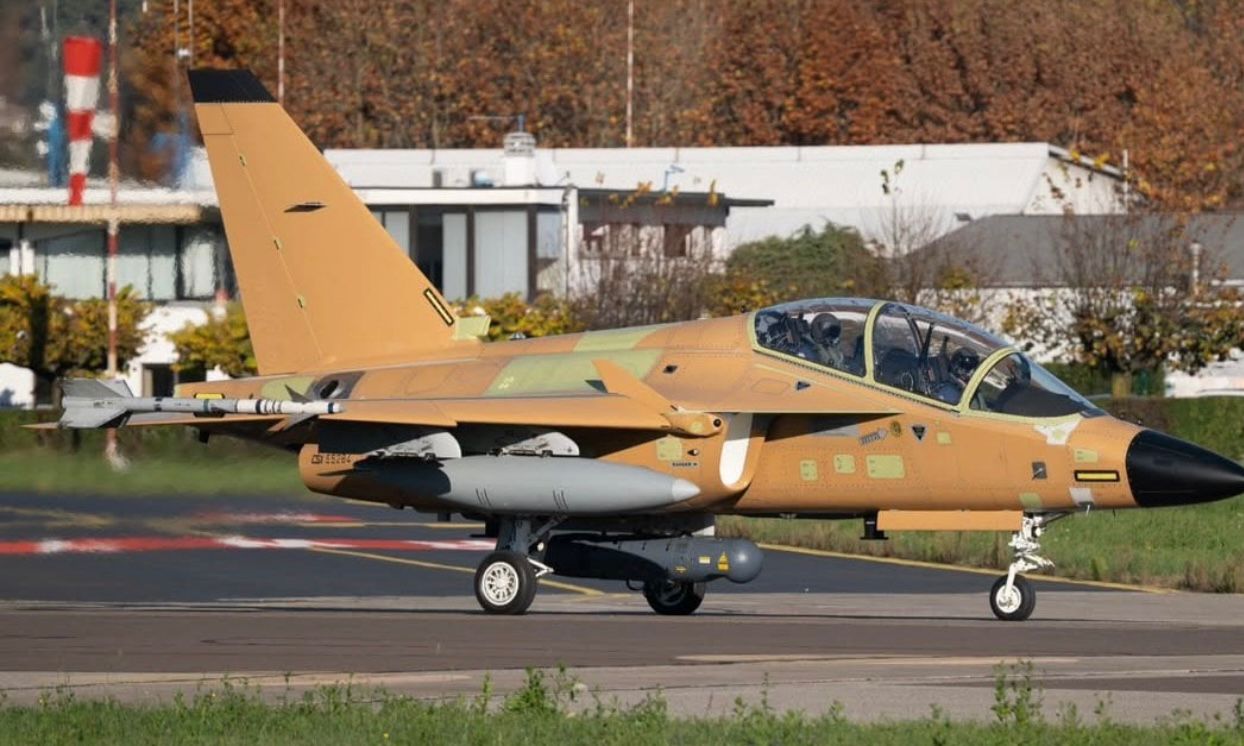
In the largest single military aviation purchase in West African history, the Nigerian government has finalized a €1.2 billion agreement to acquire 24 M-346FA light fighter aircraft from the Italian aerospace conglomerate, Leonardo S.p.A.
This acquisition is the cornerstone of Nigeria’s aggressive military modernization program, designed to transition the Nigerian Air Force (NAF) from aging platforms to a state-of-the-art precision strike fleet.
Strategic Combat Capabilities
The M-346FA (Fighter Attack) is a highly versatile platform that serves dual roles as an advanced trainer and a capable combat jet. Security officials emphasize that these aircraft will provide:
-
Precision Strikes: Advanced munitions and targeting systems to minimize collateral damage during anti-insurgency operations.
-
Aerial Surveillance: High-resolution sensors to monitor bandit movements in the North-West and jihadist activities in the North-East.
-
Close Air Support (CAS): Rapid-response capabilities to assist ground troops pinned down by hostile fire.
-
Operational Readiness: The deal uniquely includes long-term maintenance, logistics, and technical support, ensuring the jets remain flight-worthy for decades rather than falling into disrepair.
Geopolitical Context and Regional Influence
The purchase coincides with Nigeria’s increasing role as a regional “stabilizer.” The readiness to project power was recently demonstrated when Nigerian troops were deployed to Benin Republic to help restore constitutional order following an attempted coup in Cotonou.
By investing in the Italian M-346FA, Nigeria is also signaling a strategic shift in arms procurement:
-
Reduced Dependency: Moving away from traditional reliance on the US, Russia, and China.
-
Modernization: Seeking better “after-sales” support and more transparent logistics chains offered by European manufacturers.
The Financial and Social Debate
The procurement follows a $618 million borrowing plan previously approved by the Federal Executive Council. However, the scale of the €1.2 billion deal is expected to spark intense domestic debate. Critics point to:
-
Spending Priorities: Arguments that massive defense spending may come at the expense of social welfare, healthcare, and education during a period of record inflation.
-
Debt Burdens: Concerns over the long-term impact of high-interest loans used to finance military hardware.
-
Social Conditions: The contrast between high-tech military acquisitions and the deepening economic hardship faced by the average citizen.
Despite these concerns, the government maintains that restoring security is the prerequisite for economic recovery, as internal conflicts continue to displace millions and disrupt agricultural and commercial activities across the country.
