

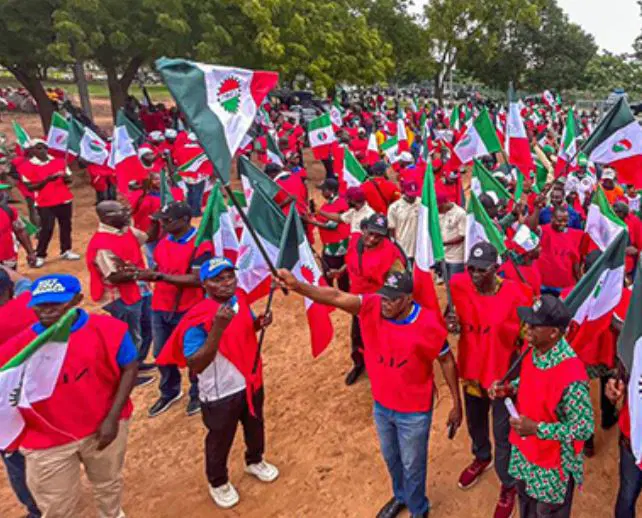
The Nigeria Labour Congress (NLC) has issued a stark warning, declaring that the country’s workforce is currently navigating the most severe economic and survival emergency in its history. According to the union, the combination of hyper-inflation, rampant insecurity, and stagnant pay has created a reality more grueling than the hardships of the Nigerian Civil War or the austerity eras of the past.
NLC President Joe Ajaero highlighted a grim comparison, noting that Nigerian employees now find themselves at the bottom of the continental economic ladder. He pointed out that workers in countries currently facing active warfare, such as Sudan and Somalia, are increasingly faring better than those in Nigeria in terms of basic economic stability.
The Anatomy of Financial Insecurity
The NLC’s assessment identifies several core factors that have pushed the Nigerian masses into a corner:
-
The Wage-to-Inflation Gap: While the national minimum wage is set at ₦70,000, the NLC pointed out the “moral failure” of a system where a single bag of rice costs more than a worker’s monthly salary. With inflation exceeding 30%, the purchasing power of the average citizen has essentially evaporated.
-
The Food Crisis: In a distressing statistic, the union noted that approximately 80% of household income is now spent solely on nutrition, leaving almost nothing for health, education, or savings.
-
Infrastructure Collapse: Because public services—such as water, electricity, and security—are largely non-functional, workers are forced to “self-fund” these essentials, further depleting their take-home pay through alternative power and private security costs.
A Convergence of Physical and Economic Threats
The report emphasizes that financial instability is not happening in a vacuum; it is being intensified by the nation’s security challenges.
-
Displacement and Loss: Terrorism from groups like Boko Haram and ISWAP, alongside banditry, has destroyed the livelihoods of those in rural and urban areas alike, leading to total impoverishment.
-
The “Commuter Crisis”: Skyrocketing fuel prices and transportation costs have reached a point where some employees can no longer afford to travel home daily, choosing instead to sleep at their workplaces to save money.
-
Currency Devaluation: The continued slide of the Naira has made imported essentials and fuel prohibitively expensive, driving a cycle of price hikes that hits the informal and formal sectors with equal force.
The Call for Urgent Reform
The NLC describes the current state as a “relentless squeeze,” where the lack of social safety nets and a functional pension system means workers have no hope for future security. The union is demanding immediate government intervention to stabilize the currency, implement a realistic living wage, and repair the crumbling social protection systems.
Ajaero concluded that without decisive action, the cycle of financial instability will not only ruin individual lives but will permanently cripple the nation’s long-term economic potential.
