

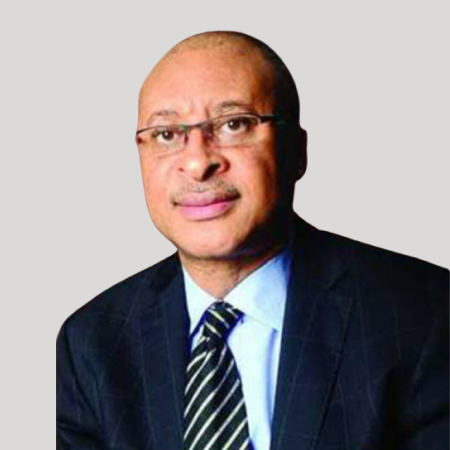
LAGOS — Renowned political economist and ADC chieftain, Professor Pat Utomi, has issued a scathing assessment of Nigeria’s current trajectory, describing the nation’s state as a “complete mess” fueled by systemic corruption and a breakdown in public trust.
In a recent dialogue with Vanguard, Utomi drew a sharp, uncomfortable contrast between Nigeria’s stagnation and Egypt’s rapid industrialization, arguing that the difference lies purely in the “seriousness” of leadership.
The Siemens Tale: A Study in Sabotage
Utomi utilized the contrasting execution of power deals with the German firm Siemens to illustrate how corruption hinders Nigerian infrastructure.
-
The Egyptian Model: Egypt leveraged state guarantees, allowing Siemens to raise the necessary capital and deliver massive power projects efficiently.
-
The Nigerian Approach: Conversely, Nigerian officials insisted on upfront payments. Utomi characterized this as “unintelligent” and strategically flawed, suggesting the primary motivation was to ensure project funds could be diverted into private pockets before work even began.
“Our difference as a nation is the distance between the ruin of anarchy and the promise of order,” Utomi remarked, highlighting that while Egypt was blasting through mountains in two weeks to meet road deadlines, Nigeria was stuck in a cycle of bureaucratic excuses.
Personal Toll of the Energy Crisis
Providing a firsthand account of the utility failure, Utomi—who resides in a “Band A” electricity zone—revealed the staggering costs of staying powered. He noted that his monthly electricity bill alone exceeds the salary of a university professor, yet he still suffers from unreliable supply.
The Economic Ripple Effect:
-
SME Paralysis: Small and medium enterprises are being “crippled” by the dual burden of high tariffs and the need for diesel backups.
-
Industrial Decline: High energy costs have rendered Nigerian manufactured goods uncompetitive on the global stage.
-
Reliance on Alternatives: Even elite consumers are being forced toward expensive solar and generator redundancies due to the “crippled” national grid.
Beyond Partisanship
Utomi’s critique was not limited to the current administration but served as a diagnosis of a long-standing culture of incompetence spanning multiple governments. He concluded that Nigeria’s failure to execute simple infrastructure goals—like the 16-lane highways he witnessed in Cairo—is a direct reflection of a leadership class that prioritizes personal gain over national destiny.
For Utomi, the “mountain story” of Egypt serves as a mirror: one nation chose to move obstacles to build a future, while the other allowed corruption to become the mountain itself.
