

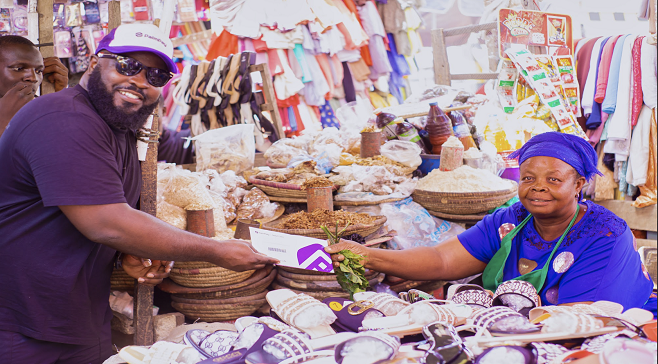
FinTech platform PalmPay has wrapped up a major financial inclusion and capacity-building initiative in Northern Nigeria, successfully transitioning over 2,000 unbanked female traders into the formal digital banking ecosystem. The targeted field campaign focused on two major commercial hubs: the Sabon Gari Market in Kano and the Central Market in Kaduna.
The project directly addresses the deep gender inclusion gap highlighted in the EFInA Access to Financial Services (A2F) Survey. The data shows a sharp disparity in Nigeria’s financial landscape: 30 per cent of adult women remain completely excluded from both formal and informal financial services, compared to 21 per cent of men. Out of the nation’s 57 million adult women, approximately 17 million live in complete financial isolation.
1. Overcoming the Cash-Box Vulnerability Corridor
In these northern markets, thousands of women run high-turnover micro-enterprises dealing in essential commodities like spices, textiles, grains, and fast-moving consumer goods (FMCG). Despite their sharp business skills, operating strictly in cash limits their growth. It exposes them to constant security risks, untracked inventory leakages, and a complete lack of credit history needed to secure commercial expansion loans.
To lower these barriers, PalmPay secured the royal endorsement of the Emir of Kano, Dr. Muhammadu Sanusi II, and moved its operations directly onto the market floors. The fintech deployed multilingual field teams to bypass the traditional institutional barriers that often alienate rural and informal traders.
2. Tactical Deployment of Agency Banking Tools
The market intervention was built around three practical operational steps:
-
In-Stall Financial Literacy Workshops: Teaching merchants how to separate personal household spending from business revenue, calculate exact profit margins, and track inventory costs.
-
Instant Account Provisioning and Hardware Issuance: Setting up digital bank accounts on the spot and equipping traders with reliable PalmPay Point of Sale (POS) terminals and mobile merchant applications.
-
Micro-Business Infrastructure Support: Distributing branded commercial umbrellas for weather protection, alongside storefront signage and transaction bookkeeping ledger kits.
3. Streamlining Revenue Collection for MSMEs
Shifting to automated systems has helped eliminate the common friction points of informal commerce, such as waiting for unverified bank alerts or dealing with missing cash.
By using POS terminals that give instant audio and text payment alerts, these micro-enterprises now have access to real-time transaction history. This automated data trail enables grassroots traders to build the verifiable cash-flow records required to access institutional credit, turning everyday survival into a scalable business model.
