

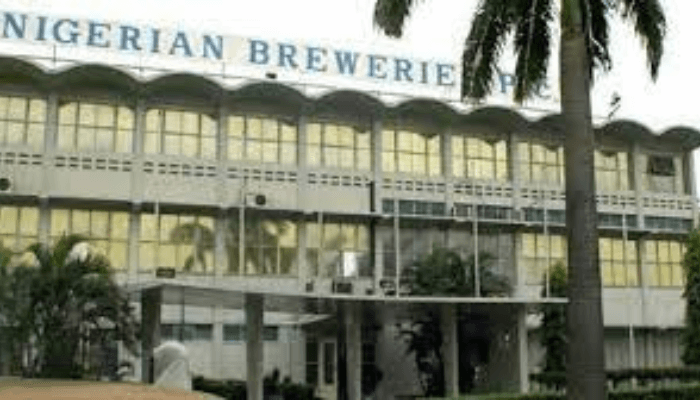
Amid rising costs and an economy still finding its footing, Nigerian Breweries just served up a financial result that’s worth raising a glass to.
The country’s foremost brewing giant posted a 25.6% jump in profit after tax for the first quarter of 2026 — closing the period at ₦55.95 billion, up from ₦44.55 billion in the same quarter last year. Filed through the Nigerian Exchange and landing on investors’ desks Friday, the numbers paint a picture of a company quietly tightening its engine while the road gets bumpier.
So what actually moved the needle?
Revenue climbed 7.7% to ₦413.02 billion, and gross profit rose 8% to ₦179.85 billion. Those are solid, if not spectacular, top-line gains. The real story, however, is buried further down the income statement — in the finance costs line. Net finance expenses collapsed by a striking 54.5%, falling from ₦15.28 billion to just ₦6.95 billion. In plain terms: Nigerian Breweries is paying dramatically less to service its debt, and that saving went straight to the bottom line.
It’s the kind of improvement that doesn’t make headlines the way a product launch does — but it’s exactly what shareholders care about.
Not everything was smooth sailing. Selling, distribution and administrative expenses surged 13.8% to ₦93.41 billion — outpacing revenue growth by a meaningful margin and squeezing operating profit to a modest 2.5% gain of ₦87.36 billion. Cost of sales also crept up 7.4% to ₦233.16 billion, a reminder that input pressures haven’t disappeared. Running a brewery in Nigeria in 2026 is still an expensive business.
But here’s what cuts through the noise: earnings per share grew 25.9%, from ₦1.43 to ₦1.80. For everyday shareholders, that’s the number that matters most — and it’s pointing firmly in the right direction.
Profit before tax also rose 14.9% to ₦80.41 billion, while a slight dip in income tax — down 3.8% to ₦24.47 billion — gave the net figure an additional lift.
The takeaway? Nigerian Breweries isn’t growing by cutting corners or riding a revenue wave alone. It’s doing something arguably more sustainable: getting smarter about its cost of capital. In an environment where many companies are still wrestling with the aftershocks of naira volatility and elevated borrowing costs, that discipline stands out.
