

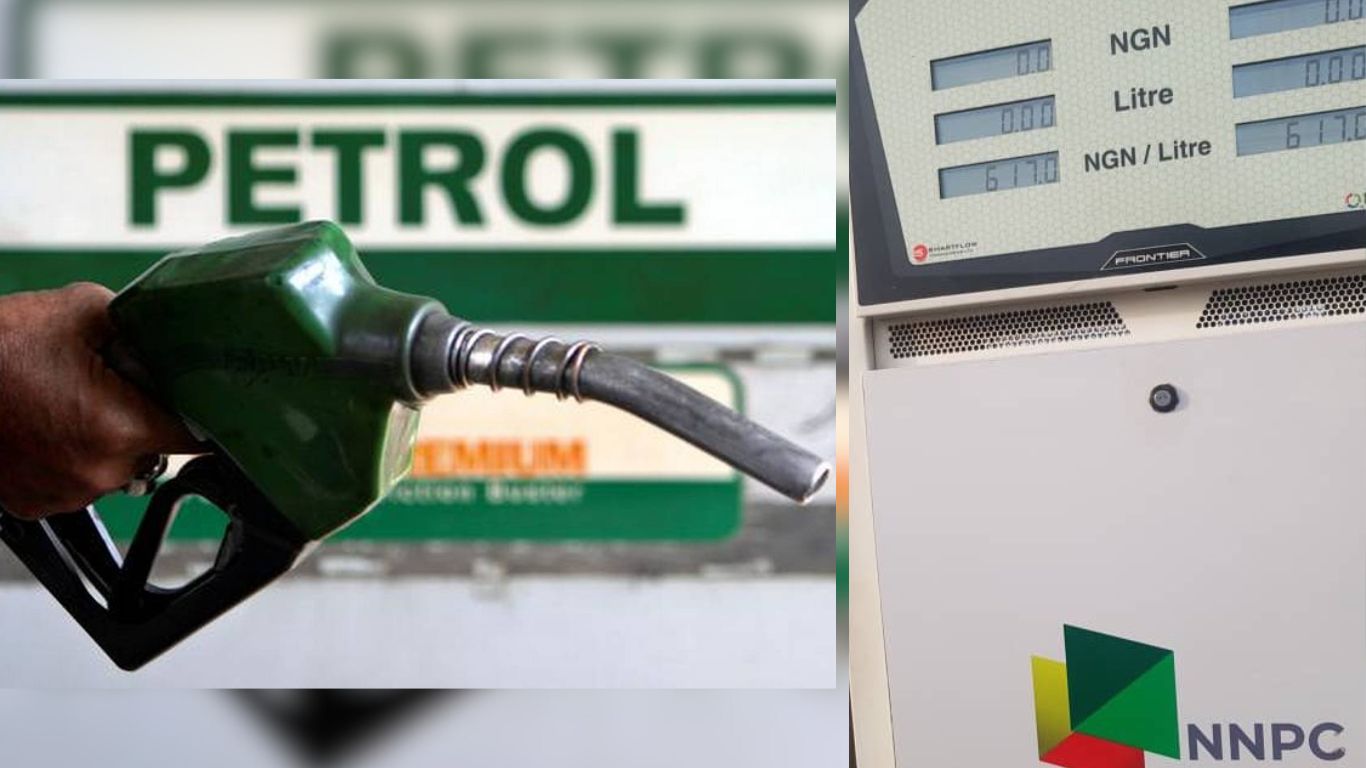
ABUJA — Despite the Dangote Refinery capturing a dominant 93% share of Nigeria’s daily petrol supply in February 2026, pump prices have continued their upward surge, hitting ₦1,300 in Abuja and ₦1,500 in the Southeast. This “refinement paradox” has sparked a heated debate between industrial logic and the immediate survival needs of the Nigerian workforce.
On Sunday, March 15, 2026, the Nigeria Labour Congress (NLC) broke its silence, demanding an immediate Wage Award and Cost of Living Allowance (COLA) to prevent a total collapse of consumer purchasing power.
The Dollar Factor: Why “Local” Doesn’t Mean “Cheap”
A common misconception is that domestic refining should automatically result in lower prices. However, the economic reality of the Petroleum Industry Act (PIA) dictates otherwise.
Musa Yusuf, former DG of the LCCI, explained that geographical location does not exempt refineries from global market forces.
-
Global Benchmarking: Crude oil feedstock is priced in US Dollars using international benchmarks (like Brent or Bonny Light), even when sold to a local refinery.
-
Feedstock Shortfall: Nigeria has struggled to meet Dangote’s total crude demand, forcing the refinery to import expensive foreign crude, which exposes the final product to global price volatility.
-
Subsidy Law: Under the PIA, the sector is fully liberalized. Any government attempt to force a lower “social price” at the pump would legally constitute a subsidy payment, which the current budget does not support.
The NLC Mandate: Beyond Cash Transfers
With transport fares doubling in some regions, NLC President Joe Ajaero warned that existing interventions are insufficient. The labor union is pushing for a multi-pronged “cushioning” strategy:
-
Direct Wage Awards: Immediate monthly supplements for all workers.
-
COLA Expansion: Adjusting allowances to match the current 15.06% inflation rate.
-
Cash Transfer Overhaul: Demanding transparency in the distribution of federal palliatives to ensure they reach the “truly vulnerable.”
-
Transport Union Engagement: A call for the government to work with unions to cap fare hikes in exchange for energy credits.
The Strategic “Forward Sales” Hurdle
The government’s ability to intervene is further hampered by past financial decisions. To secure immediate liquidity in previous years, Nigeria engaged in forward sales of crude oil.
“This means a portion of today’s production is already ‘paid for’ at yesterday’s lower prices or tied to debt servicing, leaving the government with less ‘free’ crude to use as a strategic buffer or for discounted domestic supply,” noted analysts.
Small Business Survival: The Power Priority
For Nigeria’s SMEs, the petrol crisis is compounded by the “Generator Trap.” With ₦1,500 petrol, the cost of running a small shop or a manufacturing firm has become unsustainable.
Proposed Relief Measures for Businesses:
-
Tax Incentives: Immediate waivers for small-scale businesses struggling with energy costs.
-
Electricity Reliability: A plea to the Ministry of Power to improve the national grid, as reliable electricity would instantly decouple production costs from the volatile petrol market.
-
Strategic Reserves: The call for Nigeria to finally build a Strategic Oil Reserve to act as a shock absorber during global conflicts like the ongoing US/Israel-Iran war.
