

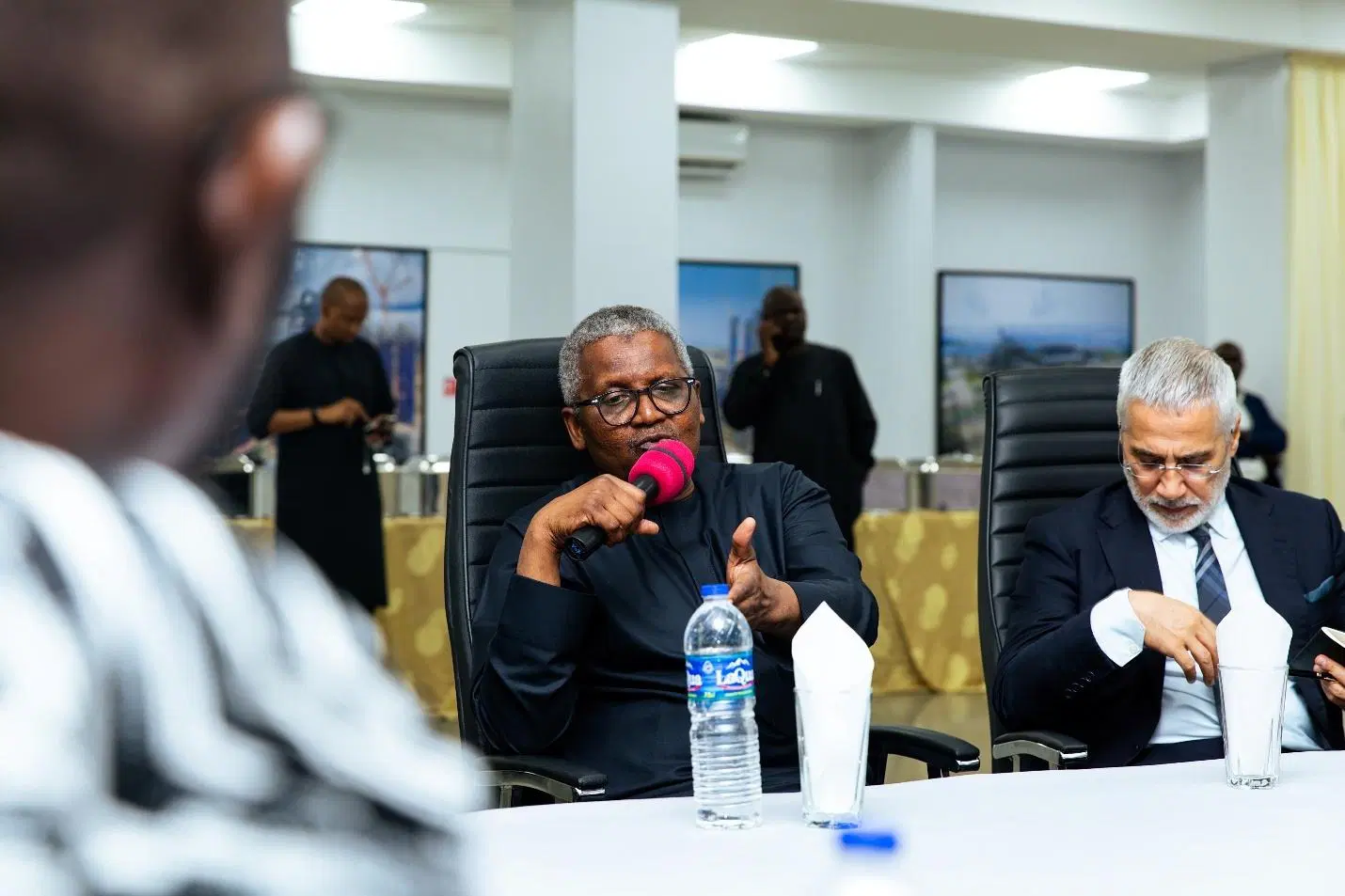
LAGOS — In a move to bridge the gap between academic theory and industrial reality, the Nile Business School (NBS), the specialized business arm of Nile University of Nigeria, recently led a high-level delegation of Executive MBA students and faculty to the Dangote Petroleum Refinery in Lagos.
The visit, described by observers as a “classroom without walls,” signals a pivot in how the next generation of African leaders is being trained—prioritizing local case studies over imported academic models.
“Practice-First” Learning
Prof. Noel Tagoe, Dean of Nile Business School, highlighted a critical flaw in traditional African business education: the over-reliance on Western case studies.
“You go to business schools all over the continent and see students studying case studies from Harvard about American businesses,” Tagoe noted. “There’s nothing wrong with Harvard, but if that’s all you have, the knowledge gained cannot be applied to our unique challenges in Africa.”
The NBS Strategy for 2026:
-
Case Study Development: Following the tour, Prof. Tagoe identified six specific case studies in the Nigerian Oil & Gas sector to be developed for the NBS curriculum.
-
Practice-First Model: Moving away from “theory-first” education to an immersive model where students engage directly with local industry giants.
-
Africa-Centric Solutions: Training leaders to identify “value leaks”—spaces where resources are exported raw—and build indigenous solutions around them.
The Myth of Foreign Expertise
Hosting the team, Alhaji Aliko Dangote shared a transformative insight regarding the Nigerian workforce. He admitted that at the project’s inception, the assumption was that most engineers would have to be foreigners due to the unprecedented scale of the refinery.
However, the reality proved otherwise. Nigerian engineers, many of whom had never schooled abroad, performed on par with their international counterparts.
“We ended up using significantly more Nigerian engineers than we thought,” Dangote stated. “Nigeria has very talented people… you see it in medicine, engineering, and entertainment globally.”
A Shared Vision for Human Capital
The visit underscored a synergy between the Dangote Group’s indigenous talent initiatives—such as its Graduate Trainee Programmes and the ₦1 Trillion Education Fund—and Nile University’s mission.
As a member of the Honoris United Universities network (the largest pan-African private higher education network), Nile University is positioning its Abuja-based Business School as a hub for “collaborative intelligence” across 10 African countries.
Nile Business School: At a Glance (2026)
| Program Type | Focus Area | Target Audience |
| Executive MBA | Leadership in African Markets | Senior Managers & Directors |
| Online MBA | Digital Transformation & Strategy | Global Professionals |
| Executive Dev. | Niche Industry Case Studies | Entrepreneurs & Industry Leads |
| Short Courses | Future-of-Work Skills | Specialized Skill-Seekers |
Redefining the “Social Contract”
Dangote concluded the engagement by urging students to reject the notion that only the government can drive national prosperity. By identifying the gap where Nigeria exported crude only to import refined fuel, he demonstrated how private enterprise can fix systemic national problems while creating massive wealth.
