

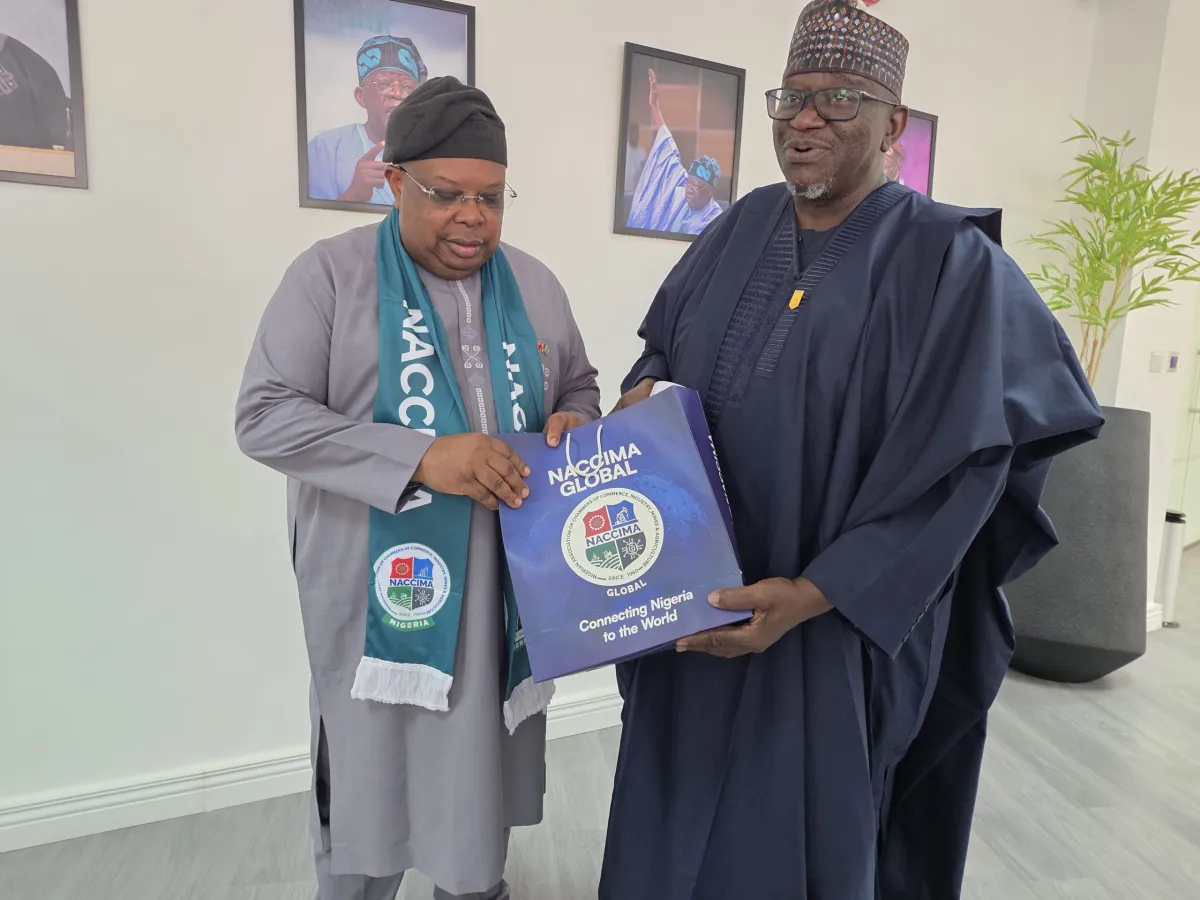
The Nigeria-China Strategic Partnership (NCSP) and the Nigerian Association of Chambers of Commerce, Industry, Mines and Agriculture (NACCIMA) established a formal working interface to reshape the Nigeria-China trade narrative.
Led by Director-General Joseph Tegbe, the NCSP is pivoting away from traditional infrastructure-heavy “project contracts” toward a results-oriented industrial model. The goal? To flip the trade imbalance by transforming Nigerian SMEs into export powerhouses capable of penetrating China’s massive consumer market.
1. The “Zero-Tariff” Weapon
The most strategic instrument discussed was China’s Zero-Tariff Agreement for qualifying African exports.
-
The Opportunity: Nigeria can now export processed agricultural goods, solid minerals, and light manufactured products to China without the burden of import duties.
-
The Target: The NCSP aims to scale bilateral trade to 350 billion RMB (~$50 billion) by 2030, with Nigerian exports accounting for at least 30% of that volume (up from current low single digits).
-
The Caveat: Tegbe warned that “the benefits are not automatic.” Success depends on strict compliance with Chinese phytosanitary (SPS) regulations and quality standards.
2. Geo-Cluster Industrial Parks
A cornerstone of the new strategy is the development of Geo-Cluster Industrial Parks. These are not just factory zones; they are regional manufacturing ecosystems:
-
Aggregation: Small farmers and miners bring raw materials to the cluster.
-
Processing: Chinese technology and machinery (facilitated via the NCSP) are used for value-addition (e.g., turning raw cassava into industrial starch or ethanol).
-
Export Hubs: The clusters will have integrated logistics and certification centers to prep goods directly for the Chinese market.
3. The NCSP Mandate & NACCIMA’s Role
The NCSP serves as the “structured coordination platform” between federal, subnational, and private entities.
4. Tech Transfer and Vocational Training
To bridge the “industrial skills gap,” both parties agreed to expand technical and vocational education (TVET) collaborations.
-
Barter Trade Model: The NCSP is advancing models where Nigerian products are exchanged for Chinese technology, ensuring that industrialization isn’t just “imported” but “transferred” to local workers.
-
Apprenticeships: Integrating SME employees into Chinese-linked manufacturing projects for hands-on technical training.
“The Zero-Tariff initiative is more than a trade concession; it is a strategic economic opening. It gives Nigerian businesses a competitive edge if we move from transactional deals to long-term development-driven collaborations.” — Joseph Tegbe, DG of NCSP, February 2026.
