

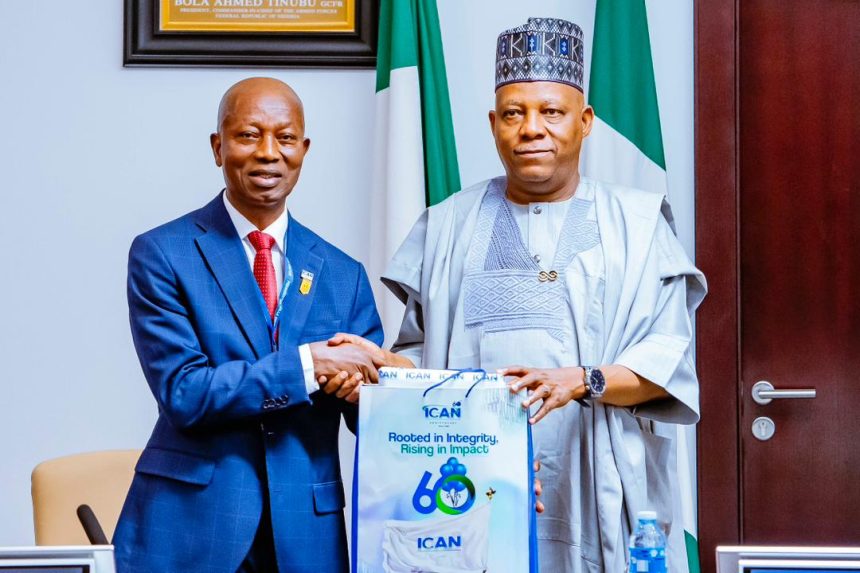
On February 2, 2026, the Federal Government of Nigeria officially launched a historic nationwide initiative to provide free training to 10 million Nigerians in financial inclusion and literacy. Flagged off by Vice President Senator Kashim Shettima at the Presidential Villa in Abuja, the program is a cornerstone of President Bola Ahmed Tinubu’s strategy to build a $1 trillion economy by 2030.
The initiative, managed by the Presidential Committee on Economic & Financial Inclusion (PreCEFI), specifically prioritizes young Nigerians and women, aiming to transform them into a skilled, ethical, and digitally competent workforce.
1. The Aso Accord: Moving Beyond “Access”
The training is the primary execution phase of the Aso Accord on Economic and Financial Inclusion (signed in April 2024).
-
The Philosophy: Vice President Shettima emphasized that true inclusion is not just about having a bank account. It is built on three pillars: Competence, Trust, and Capability.
-
The Goal: To ensure that inclusion becomes a “system” rather than a “slogan” by equipping citizens to use financial infrastructure responsibly and productively.
2. A Coalition of Professionals: The 6-Institute MoU
In a strategic move to institutionalize the training, the Office of the Vice President signed a Memorandum of Understanding (MoU) with six of Nigeria’s leading professional bodies. These institutes will design curricula, certification pathways, and mentorship programs.
| Professional Body | Role in the Initiative |
| ICAN (Accountants) | Focusing on MSME formalization and financial reporting. |
| CIBN (Bankers) | Embedding consumer protection and digital banking literacy. |
| CIS (Stockbrokers) | Providing knowledge on investment and capital markets. |
| NICA (Credit Admin) | Teaching risk assessment and credit management without collateral. |
| CRMI (Risk Management) | Training on anticipating and mitigating digital financial threats. |
| NIIE (Innovation/Entrepreneurship) | Mentoring startups to translate ideas into sustainable enterprises. |
3. The Digital Backbone: WAWU Africa
To reach 10 million people across a vast geography, the program relies on a robust digital framework.
-
Technical Partner: WAWU Africa, led by CEO Emmanuel Lennox, is providing the digital platform and enabling environment for the training.
-
Accessibility: The platform is designed to be a “living platform for execution,” ensuring that training is accessible even in underserved rural areas.
4. Why 10 Million? The Economic Imperative
The government views this as “capacity as infrastructure.”
-
Demographic Dividend: With over 60% of the population under age 25, Nigeria’s growth depends on shifting these youth from “informal labor” to “formal contributors.”
-
Economic Support: The ICAN President, Mallam Haruna Nma Yahaya, noted that bold economic reforms in late 2025 have already begun showing visible improvements, making this the ideal time to scale human capacity.
“We cannot build a one-trillion-dollar economy on weak skills, fragmented standards, or disconnected professional ecosystems.” — VP Kashim Shettima
