

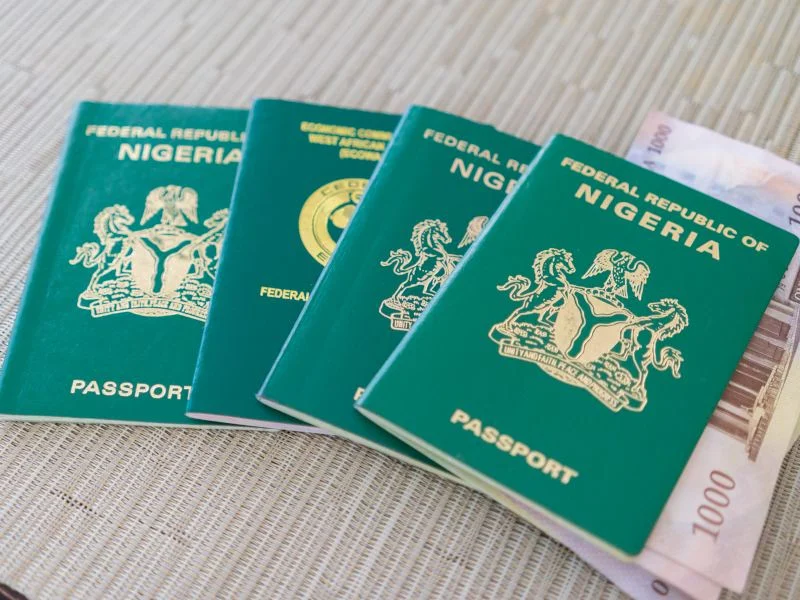
As Nigeria pushes toward a $1 trillion economy by 2030, a new debate is taking center stage: the “Mobility Gap.” While the government is signing major trade and aviation deals, experts warn that these agreements are “half-wins” if Nigerian entrepreneurs, investors, and students cannot physically cross borders to execute them.
At the Africa Social Impact Summit (ASIS) 2026 in Abuja and through a major statement from the Africa Development Studies Centre (ADSC), the message to President Bola Tinubu is clear: Trade without mobility is an illusion.
1. The Reciprocity Mandate: “Open Doors Must Swing Both Ways”
Sir Victor Oluwafemi, founder of ADSC, has called on the Federal Government to make visa facilitation a non-negotiable component of every bilateral deal. This comes on the heels of the U.S. reducing Nigerian non-immigrant visas to three-month, single-entry status in mid-2025—a move that has severely hampered business continuity.
The ADSC Proposal: A Three-Track Mobility Framework To move beyond “paper agreements,” Oluwafemi suggests a structured approach to visa access:
-
Official Mobility Track: Fast-tracked processing for government delegations and priority missions.
-
Verified Business Track: Multi-entry visas and accelerated timelines for proven exporters, investors, and trade missions.
-
Professional & Talent Track: Dedicated channels for technical experts, artists, and researchers.
“A trade agreement only works when traders can travel to meet buyers, inspect goods, and conclude contracts. Without visa facilitation, we are building corridors that look open but function as closed.” — Sir Victor Oluwafemi
2. Unlocking the $1 Trillion Economy: The Rule of Predictability
Inside the State House Conference Centre, Korede Demola-Adeniyi, Executive Director at The Alternative Bank, emphasized that capital is “cowardly”—it avoids uncertainty. For Nigeria to attract the private capital needed for its $1 trillion goal, the “rules of the game” must be stable.
The “Blended Finance” Solution Demola-Adeniyi advocated for Blended Finance, where the government, banks, and development finance institutions (DFIs) share risk. This model is already working:
-
E-Mobility in Kano: A partnership between The Alternative Bank and the UK’s FCDO trained 100 women and 30 mechanics, proving that coordinated capital can expand economic participation.
-
Policy Stabilisation: She urged the government to adopt a “Multi-Year Blended Finance Framework” to protect approved projects from midstream policy changes.
3. The ASIS 2026 Takeaway: Scaling Action
The summit, co-hosted by the Office of the Vice President and Sterling One Foundation, launched several “policy-backed” initiatives designed to move Nigeria from dialogue to execution:
-
Nigeria Foundational Learning Fund: Targeting the out-of-school children crisis.
-
WYFEI Nigeria (Women and Youth Financial and Economic Inclusion): A platform for advancing economic empowerment through performance accountability.
The Bottom Line for 2026
Nigeria is at a crossroads where diplomacy meets delivery. The government’s ability to negotiate visa reciprocity will determine if Nigerian businesses can compete globally, while policy consistency will determine if international investors stay for the long haul.
