

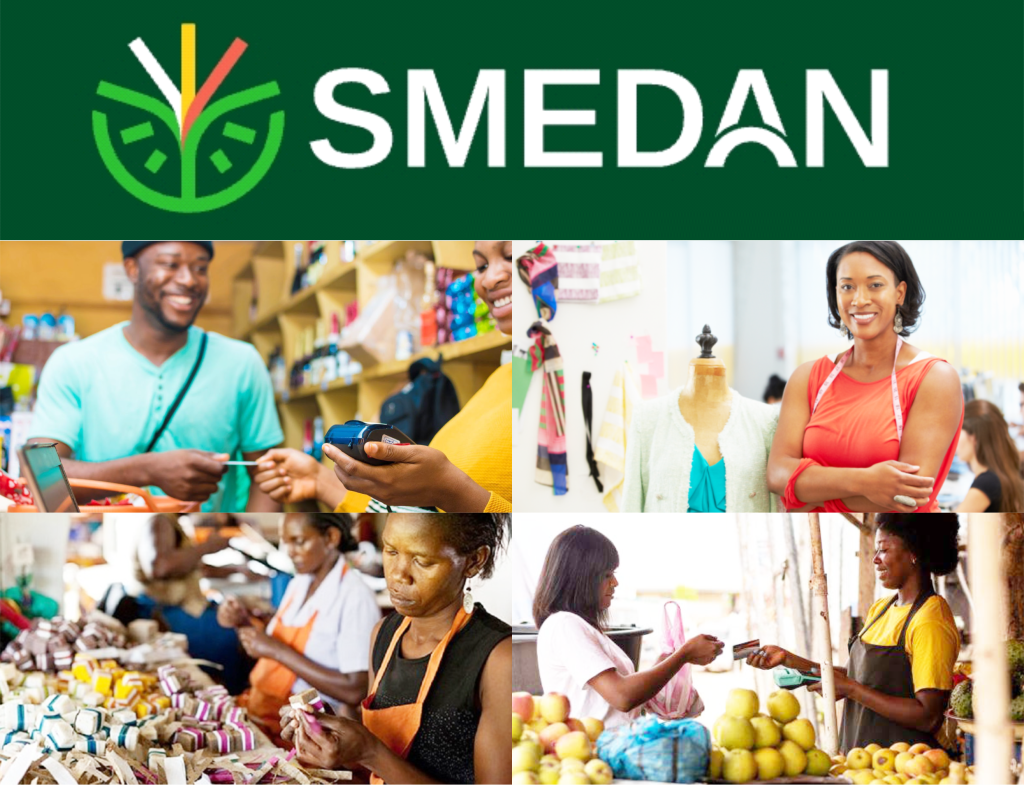
Nigeria’s economic recovery has a new frontline: the local storefront. In a bold push to reverse the loss of three million businesses since the pandemic, the Small and Medium Enterprises Development Agency of Nigeria (SMEDAN) has launched a multi-billion naira offensive to transform “nano” operations into industrial players.
At the heart of this strategy is a staggering N200 billion federal commitment, alongside a move to formalize one million new businesses by the end of 2026.
The Capital Injection: Grants Over Debts
Recognizing that the smallest businesses are often the most fragile, Director-General Charles Odii revealed a tiered funding structure designed to provide oxygen without the “chokehold” of high-interest debt:
-
N50 Billion for Nano-Businesses: Direct, non-repayable grants for shops with fewer than three employees.
-
N75 Billion for SMEs: Affordable credit to scale existing operations.
-
N25 Billion for Manufacturers: Focused on increasing local production capacity.
“The goal is to provide relief that reflects the scale of operations,” Odii explained. “We don’t want to burden the smallest operators with repayment while they are still trying to find their footing.”
The “ICSS” Framework: Teaching the Hustle to Scale
A major barrier to financing in Nigeria isn’t just a lack of funds—it’s a lack of “bankability.” To bridge this, SMEDAN has standardized its training under a new curriculum called ICSS (Inspire, Create, Start, and Scale).
This program is designed to move entrepreneurs through a structured journey, from the first spark of an idea to becoming investment-ready. By the time a business completes the “Scale” module, it is equipped with the financial records and governance structures required to secure single-digit loans from partners like Sterling Bank (who have already earmarked N5 billion for the cause).
Grassroots Governance: 774 Centers of Impact
SMEDAN is taking the fight to the local government level. The agency is rolling out:
-
Industrial Hubs: Replicating MSME clusters nationwide to provide shared workspaces, power, and tools.
-
National MSME Council: A direct reporting line from local business owners straight to the Presidency.
-
One Local Government, One Product (OLOP): Encouraging communities to form cooperatives to access collective funding for specialized local goods.
The Bigger Picture
With 250,000 free business registrations already approved, the government is making a clear play to bring the informal economy into the light. For Charles Odii, this isn’t about expanding the tax net—it’s about survival. “Hunger leads to anger, and anger leads to violence,” he warned. “By supporting SMEs, we tackle insecurity at its root.”
As 2026 unfolds, SMEDAN’s “Harvest Year” will be measured by one metric: how many of Nigeria’s 39.25 million small businesses can successfully make the jump from “surviving” to “thriving.”
