

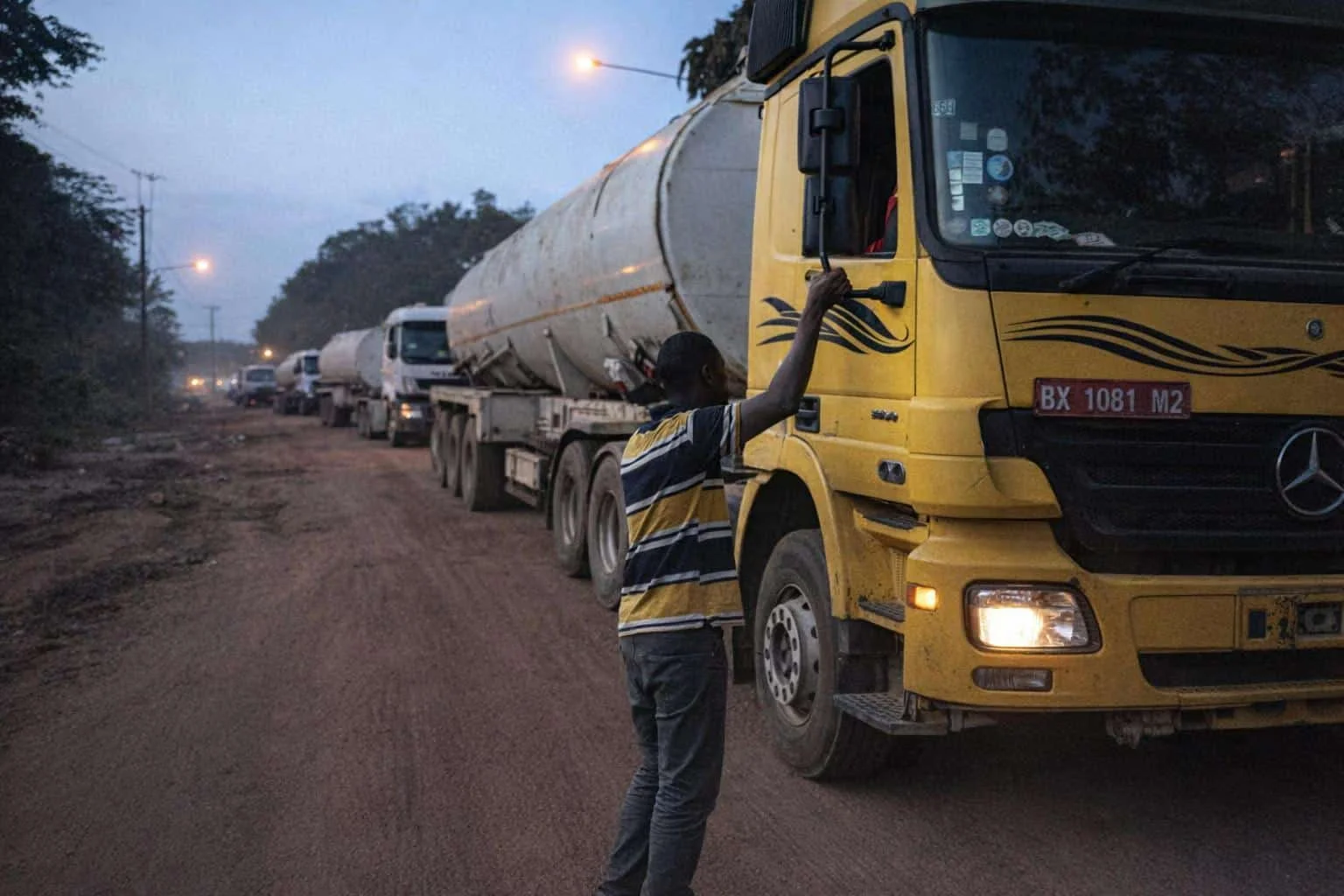
The Sahel region’s geopolitical landscape has shifted from diplomatic cooperation to a “command economy” for security. Niger’s Ministry of Transport has just delivered a stark ultimatum to its private logistics sector: regional solidarity is no longer optional.
By revoking the licenses of 14 road haulage operators and withdrawing the permits of 19 drivers, the Nigerien government has essentially nationalized the risk associated with the “Niamey-Bamako Axis.” This move marks a critical escalation in the Alliance of Sahel States (AES) strategy to break the jihadist “siege” on Mali.
1. The Strategic Chokepoint: The 1,400km “Corridor of Fire”
The 1,400-kilometer route between Niamey and Bamako is currently the most contested logistics corridor in West Africa. While Niger became a critical oil producer following the operationalization of the Niger-Benin pipeline, landlocked Mali remains the AES’s weakest link due to its energy dependency.
-
The JNIM Siege: The Al-Qaeda-affiliated Group for the Support of Islam and Muslims (JNIM) has moved beyond guerilla warfare into economic strangulation.
-
Aviation Paralysis: By targeting fuel tankers, JNIM has successfully caused “fuel droughts” at Modibo Keita International Airport in Bamako, leading to the cancellation of regional and international flights by mid-January 2026.
-
The 82-Tanker Precedent: In late 2025, Niger successfully delivered 82 tankers under heavy military escort. The recent sanctions target those who balked at the second wave of these dangerous but vital missions.
2. Legal and Regulatory Fallout
Transport Minister Abdourahamane Amadou has framed the drivers’ reluctance not as a labor issue, but as a “serious violation of legal and regulatory obligations.” This implies that under current AES emergency frameworks, haulage companies are treated as essential service providers similar to military contractors.
The Weight of the Sanctions: | Category | Action Taken | Operational Impact | | :— | :— | :— | | Corporate Operators | 14 Licenses Revoked | Immediate dissolution of regional contracts and asset seizure risks. | | Individual Drivers | 19 Permits Withdrawn | Permanent blacklisting from the AES transport pool. | | Mid-Tier Carriers | 1-Year Suspension | One operator suspended as a final warning to the industry. |
3. The Macroeconomic Ripple Effect
The reluctance of drivers is rooted in a grim reality: between September and December 2025, hundreds of tankers from Ivory Coast and Senegal were incinerated by militants.
-
Inflationary Spiral: As logistics firms raise their “danger pay” premiums, the cost of a liter of fuel in Bamako has reportedly reached 2,000 CFA francs ($3.50) on the black market.
-
Supply Chain Resilience: The AES is moving toward a Joint Military Force (5,000 troops) specifically to protect these “Energy Convoys,” signaling that future fuel deliveries will resemble military operations more than commercial trade.
4. 2026 Outlook: The Solidarity Test
The “domino effect” that analysts feared in late 2025 has arrived. If the AES cannot secure its internal energy flows, the legitimacy of the tri-state alliance—Niger, Mali, and Burkina Faso—could fracture under public pressure from blackouts and skyrocketing food prices.
“This is no longer a matter of private business choice. Ensuring the fuel lifeline to Bamako is a matter of sovereign survival.” — Official Statement, AES Confederal Secretariat
