

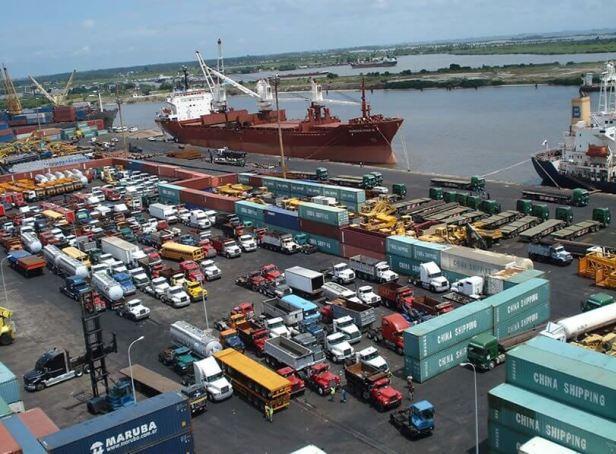
In a major policy shift aimed at crushing the final remnants of hyper-inflation, Nigeria is preparing to review its import tariff structure. Dr. Jumoke Oduwole, the Minister of Industry, Trade and Investment, revealed on Thursday that the government is “recalibrating trade measures” to lower production costs and curb food prices.
The announcement was made during the Nigeria–United States Commercial and Investment Partnership (CIP) ministerial meeting in Lagos—a high-stakes forum where officials from both nations are negotiating the future of a $13 billion trade relationship.
Strategic Relief: Why Now?
While Nigeria has seen a dramatic drop in food inflation—plummeting from nearly 40% in late 2024 to 10.84% in December 2025—manufacturers are still gasping for air. The combination of high import duties on raw materials and a fluctuating exchange rate has kept the “cost of living” high for the average citizen.
The “Tariff Review” focuses on:
-
Industrial Inputs: Reducing duties on machinery and equipment to make “Made in Nigeria” goods cheaper than imports.
-
Agribusiness Support: Lowering costs for fertilizers and irrigation tools to sustain the downward trend in food prices.
-
Competitive Balancing: Ensuring that local manufacturers aren’t “taxed out of existence” by high duties on components they cannot yet source locally.
The US-Nigeria “Concession” Game
The timing of this announcement is no accident. Following a year where the US administration imposed a 15% tariff on certain Nigerian exports, Oduwole’s signal of “openness” is being viewed as a conciliatory move.
The US delegation, led by Bradley McKinney, has been pushing for Nigeria to lift import bans on 25 specific products. A tariff reduction could be the “middle ground” that keeps the $13 billion trade window open while protecting Nigeria’s industrialization goals.
Expert Take: “You Can’t Tax Your Way Out of Inflation”
Michael Olawale-Cole of NACCIMA supports the move but adds a word of caution. While slashing tariffs will make industries “more affordable,” he warns that Nigeria must not become a “dumping ground.”
“If your goods are more expensive than the one being imported, you are losing out. We must slash rates to make our industries competitive, but we must also take advantage of our local markets,” Olawale-Cole stated.
What This Means for 2026
The “Recalibration” suggests that the Federal Government is moving away from purely protectionist policies toward a “Trade Facilitation” model. With the launch of the National Single Window (NSW) in early 2026, the goal is to make Nigeria’s ports faster, its duties lower, and its economy a $1 trillion powerhouse by 2030.
