

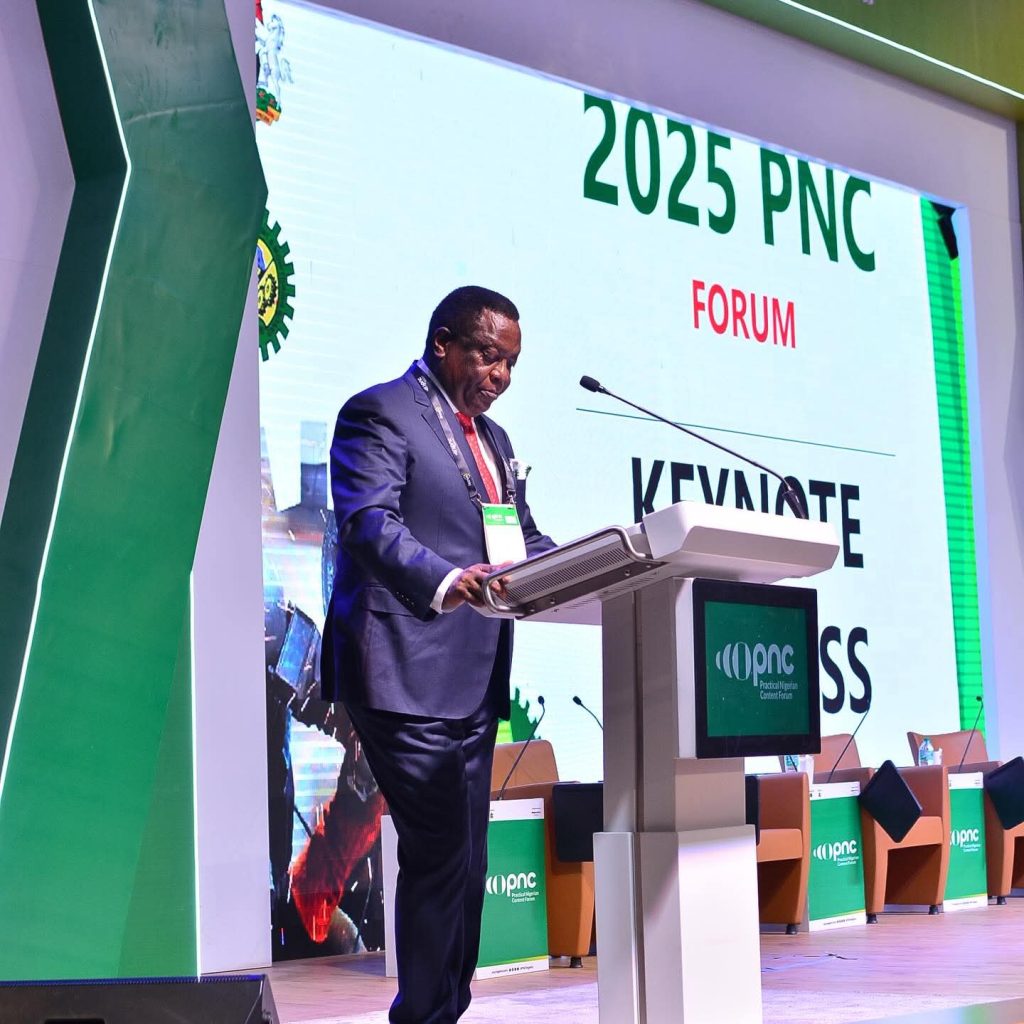
At the ongoing 14th Practical Nigerian Content (PNC) Forum in Yenagoa, industry leaders highlighted Nigeria’s renewed commitment to leveraging local talent and indigenous enterprises to drive competitiveness and growth in the oil and gas sector. Senior officials stressed that recent reforms and strategic investments are transforming the sector into a hub for efficient project execution, job creation, and industrial expansion.
During the forum, a key announcement came from the Bank of Industry (BoI), which revealed its partnership with the Nigeria Content Monitoring and Development Board (NCDMB) through a $100 million Nigerian Content Intervention Fund (NCIF) equity investment scheme. The fund is designed to provide equity and quasi-equity capital to high-potential Nigerian companies, complementing traditional debt financing and enhancing long-term access to risk capital necessary for scaling operations, increasing competitiveness, and generating value.
Speaking on the forum’s objectives, Nigeria’s presidential aide, Verheijen, emphasized that local content policies were never intended as an end but as a tool for delivering large-scale, cost-effective projects on schedule. She highlighted that upstream project economics must remain competitive, execution timelines credible, and capital deployment efficient. According to her, recent reforms have positioned Nigeria among the top quartile of global jurisdictions in terms of project attractiveness, helping the country secure three of Africa’s four major Final Investment Decisions (FIDs) in 2024.
Verheijen further clarified that the pursuit of 70 percent in-country value must produce tangible benefits for industry, communities, and the broader economy. She pointed to successful examples such as fabrication yards like SHI-MCI, LADOL free zones, and modular refining initiatives like Waltersmith as proof of local capability. She underscored that ongoing upstream projects—including Shell’s Bonga North, TotalEnergies’ Ubeta gas development, and the HI gas project—present opportunities to entrench efficiency and scale local content impact.
Echoing these remarks, BoI Managing Director and CEO, Dr. Olasupo Olusi, explained that the NCIF equity scheme reflects a disciplined investment approach, combining rigorous due diligence with post-investment monitoring to ensure returns while advancing national priorities. He described the initiative as a milestone in the BoI–NCDMB partnership, aimed at strengthening indigenous participation across Nigeria’s oil and gas value chain, creating jobs, facilitating technology transfer, and supporting industrial development aligned with the government’s 10-year roadmap.
Both Verheijen and Olusi highlighted that regulatory reforms and targeted funding mechanisms are critical for ensuring that Nigerian companies can compete on a global scale. As Nigeria aims for 3 million barrels of crude and 10 billion standard cubic feet of gas per day by 2030, they affirmed that efficient, data-driven policy implementation and strategic capital deployment are key to achieving these ambitions while transforming communities and sustaining economic growth.
