

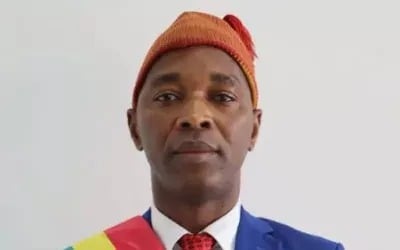
Nigeria has stepped in to protect Fernando Dias da Costa, a leading opposition presidential candidate in Guinea Bissau, after credible threats to his safety emerged during the country’s latest political upheaval. The Ministry of Foreign Affairs confirmed on Monday that President Bola Tinubu authorized da Costa’s shelter at the Nigerian Embassy in Bissau, as outlined in a letter sent to ECOWAS Commission President Omar Alieu Touray on November 30.
Da Costa, who challenged incumbent President Umaro Sissoco Embalo in the November 23 presidential elections, found himself at the center of an escalating crisis when both candidates declared victory before final results could be released. The situation deteriorated on November 26, when military officers led by Brigadier General Dinis Incanha seized power, citing a need to prevent alleged election manipulation. The coup resulted in the formation of a transitional military government and the installation of General Horta Inta A Na Man as interim leader for a one-year period. Embalo, detained during the coup, was subsequently permitted to depart for Senegal.
In response to the turmoil, Nigeria’s official communication highlighted Tinubu’s commitment to regional democracy and requested ECOWAS to enhance security support for da Costa at the embassy. The letter’s authenticity was confirmed by Alkasim Abdulkadir, media aide to the foreign minister, who emphasized Nigeria’s dedication to peace and democratic governance in West Africa.
Meanwhile, da Costa claimed he narrowly avoided arrest by escaping through a back door, and accused Embalo of orchestrating the coup to avoid conceding electoral defeat.
The crisis drew swift condemnation from regional and continental bodies. ECOWAS suspended Guinea Bissau from participating in its decision-making institutions and called for the immediate release of detained officials. The African Union also suspended the country, reiterating its stance against unconstitutional power grabs. In an effort to mediate, ECOWAS dispatched a delegation of heads of state to Bissau to negotiate a return to civilian rule.
Guinea Bissau’s political instability is longstanding, marked by nine coups or coup attempts since independence in 1974. The country’s role as a trafficking corridor for Latin American cocaine into Europe has often been linked to its recurring unrest.
