

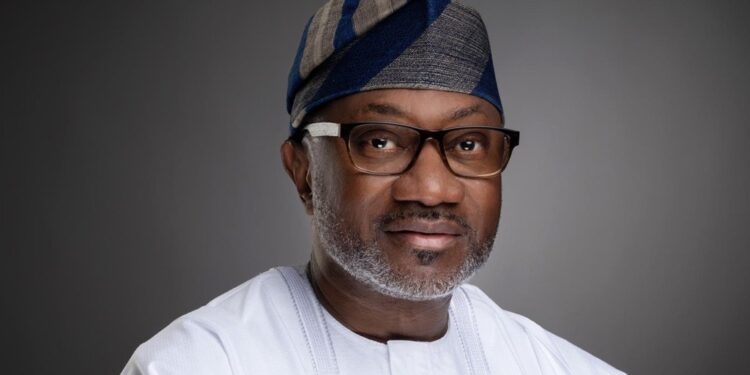
Nigerian billionaire and philanthropist Femi Otedola, estimated by Forbes (November estimate) to possess a personal fortune of $1.6 billion, is far from retirement. The recognizable 63-year-old, who shares the 16th spot on Africa’s richest list with business leaders like South Africa’s Christo Wiese, is now applying his expertise to solve Nigeria’s enduring energy supply crisis, having successfully navigated the volatile domestic fuel market.
Mastering the Oil Sector
Otedola’s success began with a breakthrough idea after a diesel delivery delay highlighted supply chain inefficiencies. In 2003, he founded Zenon, which strategically acquired stakes in downstream infrastructure, quickly establishing a dominant position in Nigeria’s domestic fuel trade. By 2007, he leveraged this success to gain a controlling interest and executive roles at African Petroleum (later rebranded as Forte Oil).
However, the global financial crisis of 2008 caused crude prices to plummet from $146 to under $40, forcing Forte Oil into a brutal restructuring involving significant asset sales and debt repayment. Otedola’s resilience and strategic decision-making during this period were critical, ultimately leading to a successful turnaround. He eventually sold his remaining 75% stake in Forte Oil in 2019.
The Shift to Electricity Generation
The decision to transition from a proven cash generator (fuel) to the uncertain power sector was deliberate. Otedola stated he felt it was time to “reposition for the future,” recognizing that the “real opportunity—and Nigeria’s real challenge—lay in electricity generation.” After extensive due diligence in 2013, he chose to invest in the power generator Geregu, which operates natural gas-fired turbines and boasts an installed capacity of 435 MW. He credits expert consultants for advising against distribution companies, a decision he believes “saved us billions.”
Addressing Nigeria’s Power Deficit
Otedola acknowledges the scale of the national challenge: Nigeria, Africa’s largest economy, suffers from a severe power deficit. With over 230 million people, 85 million (roughly the population of Egypt) lack access to electricity. Compared to South Africa’s nearly 50,000 MW capacity for 63 million people, Nigeria’s estimated 13,000 MW capacity is crippling. Otedola notes that when the grid fails, the economy is forced to rely on costly, wasteful diesel generators—the very basis for his founding of Zenon.
His plan is to consolidate Geregu as a benchmark for private generation through world-class governance and strong partnerships, including with the State Grid Corporation of China. He believes sustained growth requires ploughing profits back into operations and expanding capacity to meet rising demand.
On Competition and Investment
While admiring entrepreneurs like Aliko Dangote for their self-belief in pursuing transformative projects like the new oil refinery, Otedola maintains that Nigeria remains over-reliant on oil. He supports the government’s efforts to diversify into sectors like agriculture, technology, and manufacturing, which can employ millions.
Regarding investment, Otedola is optimistic about Nigeria’s future, citing ongoing reforms by the Presidential Enabling Business Environment Council (PEBEC), improvements in infrastructure (roads, rail, airports), and the country’s vast potential across technology and agriculture. He argues that “Africa risk” is a “lazy shorthand” and that African markets, including Nigeria, have historically offered high returns. He insists that for Nigerian entrepreneurs abroad to return, the country must ensure the right climate: reliable power, rule of law, and returns on capital.
The Entrepreneurial Roots
Otedola’s drive began early, long before his seventh birthday, when he created his own nail-clipping business, FEMCO, charging guests at his father’s Victoria Island home—including John George Luttrell, the Managing Director of Mobil Oil Nigeria. His father, Michael Otedola, a journalist and later Governor of Lagos, provided valuable contacts, but Otedola maintains that “discipline and self-belief matter more than background.”
He also addressed his early decision to drop out of school, noting that while education is valued, Nigeria is increasingly recognizing that skills, resilience, and entrepreneurship are equally vital for success. His memoir, Making It Big, documents his consistent maverick streak, like carrying a briefcase to primary school, and his philosophy of cutting off negative associations to focus on results.
