





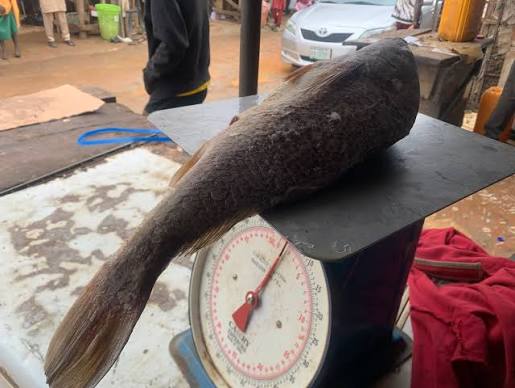
The regional food supply chain in Nigeria’s capital is showing notable resilience despite significant logistical challenges. The Kado Fish Market in the Federal Capital Territory (FCT) remains a primary distribution engine for aquaculture products, processing between 40 and 50 tonnes of fresh fish daily.
Under the coordination of the Fresh Fish Sellers Association of Nigeria, the market serves as a central wholesale clearing point, supplying retail buyers across Abuja and neighboring Nasarawa and Kaduna states. While imported frozen varieties like croaker are sold, the market is dominated by fresh, locally farmed species, including Catfish, Hybrid, Clarias, Tilapia, and Asa (scaled fish).
Logistics Bottlenecks and Transport Inflation
The primary risk to this agricultural value chain is the rising cost of moving goods along domestic trade routes. A significant portion of the region’s live fish is sourced from aquaculture farms in Kwara State, requiring reliable, temperature-controlled transit over long distances.
These shipping delays do more than just drive up freight bills; they present a direct operational hazard. Because live fish require continuous water aeration during transit, prolonged highway delays and illegal roadblocks lead to high stock mortality, leaving wholesale merchants to absorb the resulting financial losses.
The Rise of Graduate-Led Micro-Retail
Despite these supply-chain pressures, the market has evolved from an informal trading post into a highly structured entrepreneurial hub. Association leadership notes that roughly 90% of the active traders in the fresh fish segment are university graduates who chose self-employment over scarce white-collar jobs.
The sector also serves as a vital platform for women’s economic empowerment. Retail traders, including Hauwa Aliyu and Grace Samuel, report that consistent consumer demand has kept their businesses sustainable despite inflation. Because fish remains one of the most affordable protein sources for middle- and lower-income families, customer volume has remained steady.
By restructuring their sales models and sharing transportation costs, these small-scale traders are keeping fresh food flowing into the capital while securing steady household incomes in a challenging economy.