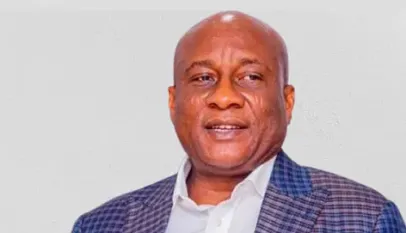





In a major fiscal move announced in February 2026, Nigeria’s Minister of Finance and Coordinating Minister of the Economy, Wale Edun, revealed that the federal government will begin selling selected state-owned assets this year. Speaking on the sidelines of the AlUla Conference for Emerging Market Economies in Saudi Arabia, Edun positioned asset sales as a strategic alternative to further sovereign borrowing.
With a projected spending plan of ₦58 trillion for 2026 and anticipated revenues of only ₦33.27 trillion, the government is staring at a massive ₦25 trillion budget deficit. Asset sales are expected to bridge this gap while deepening private sector participation in the economy.
1. The Strategy: “Optimizing” Rather Than Outright Selling
The administration is moving away from the traditional model of keeping “idle” assets under full state control. Instead, the focus is on Public-Private Partnerships (PPP) and equity-sharing.
-
Refinery Revitalization: The government is in advanced talks with a Chinese petrochemical firm and other investors to operate Nigeria’s aging refineries (Warri, Port Harcourt, and Kaduna).
-
Equity Stakes: Rather than selling the refineries entirely, the NNPC is offering minority equity stakes. This allows the plants to be self-financing and managed by experienced industrial operators while the state retains a “skin in the game.”
-
Economic Growth: By channeling private capital into infrastructure, the government aims to lift GDP growth to 4.4%—the fastest rate in over a decade.
2. Restoring Investor Confidence
Minister Edun emphasized that the far-reaching reforms initiated since 2023—including the removal of fuel subsidies and the floating of the Naira—have made Nigeria “very competitive.”
-
Stabilization: As of early 2026, inflation has begun to moderate and the Naira has found a stable trading range compared to the volatility of 2024 and 2025.
-
Revenue Growth: The Nigeria Revenue Service (NRS) reported a 30% growth in income to ₦28.3 trillion in 2025, providing a stronger foundation for these asset transactions.
3. Historical Precedents and Future Projections
Nigeria has successfully utilized this route before, notably with the privatization of PHCN (2013) and the sale of Nitel (2015). JP Morgan recently estimated that Nigeria could potentially raise up to $17 billion from a well-executed asset sale program.
Nigeria’s 2026 Fiscal Outlook at a Glance
“The plan is to offer some assets in 2026… We are interested in private-public partnerships and the optimization of our assets by having others come in and invest.” — Wale Edun, Minister of Finance, Feb 2026.