







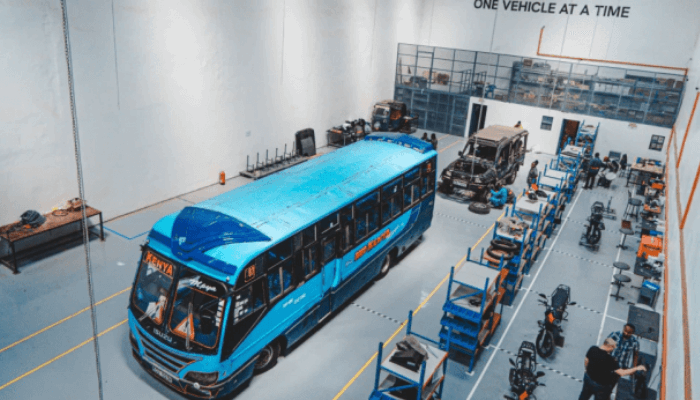
The African automotive landscape is undergoing a radical shift. Leading the charge are Nigeria and Kenya, both of which have transitioned from being simple importers of electric vehicles (EVs) to becoming hubs for local assembly.
This movement aims to replace the ubiquitous petrol-powered minibuses and taxis with cleaner, more cost-effective electric alternatives, leveraging partnerships with Chinese manufacturing giants.
1. Nigeria: Saglev’s 2,500-Unit Ambition
In Lagos, Saglev Electromobility, a joint venture between Nigeria’s Stallion Group and China’s Sokon Motor, has commenced the assembly of 18-seater passenger electric vans.
-
The Tech: Kits are supplied by Dongfeng Motor Corp, a major Chinese OEM.
-
The Scale: The company plans to assemble 2,500 vehicles annually, eventually expanding to 17 different electric models for the West African market.
-
Infrastructure: To combat power instability, Saglev is integrating solar-powered charging stations into its rollout.
“This is a major step in Nigeria’s transition toward clean, fossil-free transportation… it’s a clear signal that electric mobility in Nigeria is practical and ready for adoption.” — Dr. Sam Olu Falaye, CEO of Saglev.
2. Kenya: Rideence Africa’s $2.46M “Born in Kenya” Model
Kenya has reached a similar milestone in Mombasa, where Rideence Africa has partnered with Associated Vehicle Assemblers (AVA) to establish the nation’s first dedicated EV assembly line.
-
The Deal: A $2.46 million (KSh 320 million) investment to assemble 152 vehicles by the end of February 2026.
-
Key Models: The compact Henrey electric taxi (the “Mini Dragon”) and Joylong electric minibuses.
-
Impact: Local assembly is expected to reduce vehicle prices by up to 25% due to tax incentives and lower import duties.
3. The “Pay-as-You-Drive” Revolution
The high upfront cost of EVs has long been a barrier. Startups are now using creative financing to put electric vans on the road:
-
Lease-to-Own: Rideence leases taxis for approximately $18 (KSh 2,400) per day.
-
Kilometer-Based Billing: BasiGo and other players charge operators based on distance—roughly 20 U.S. cents per kilometer—covering the cost of the battery and charging.
-
The Savings: Charging an EV for a 200km range costs roughly $3, compared to over $15 in petrol for the same distance.
4. Comparative Snapshot: The 2026 EV Landscape
The Road Ahead
While Ethiopia (via BKG) and South Africa are also entering the fray, the continent still only hosts about 30,000 EVs in a sea of millions of internal combustion engines. However, with Nigeria recently signing an MoU with South Korea’s AEDC to build a plant capable of 300,000 vehicles annually, the era of mass-market African EVs is no longer a distant dream.


