






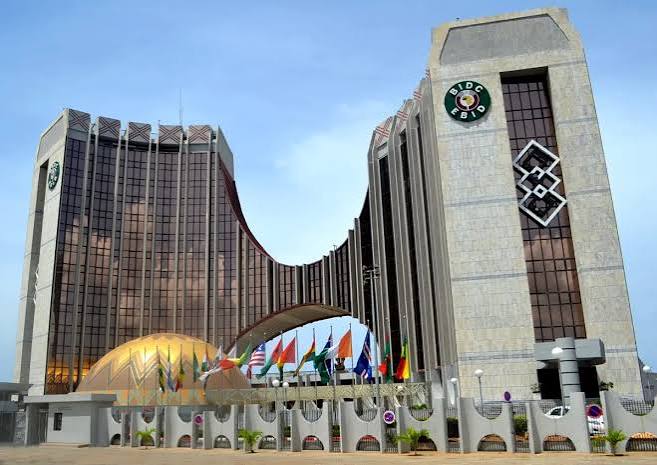
West African economies are steering through a period of structural consolidation following a highly resilient fiscal performance. According to the 2026 West African Development Outlook released by the ECOWAS Bank for Investment and Development (EBID), the sub-region achieved an aggregate GDP expansion of 4.8% in 2025. This expansion was driven by falling public debt ratios, narrowing fiscal deficits, and sharp contractions in core inflationary pressures.
However, bank analysts warn that these hard-won macroeconomic gains face immediate pressure going into the latter half of 2026. Prolonged geopolitical friction in the Middle East continues to cause ripples across international shipping routes, introducing fresh oil volatility and fertilizer supply challenges that threaten regional food security.
The Paradox of Jobless Growth
A key challenge highlighted in the report is the persistent gap between top-line GDP expansion and real-world employment generation. Despite strong mineral production and rising manufacturing output, sub-regional labor productivity grew slower than expected.
As a result, modern formal economies have been unable to absorb the surging volume of young professionals entering the workforce. To insulate consumers from the resulting cost-of-living pressures, various governments have temporarily removed petroleum taxes and reintroduced fuel subsidies. While these interventions offer immediate relief, they are projected to widen average sub-regional fiscal deficits from 2.6% to 3.5% of GDP.
Capitalizing on Upstream Commodity Windfalls
To counter these budgetary pressures, the development bank advises commodity-exporting nations to aggressively maximize their current upstream revenues. With global crude benchmarks averaging above $80 year-to-date—well ahead of the conservative $73 per barrel fiscal estimates used in most national budgets—nations like Nigeria, Ghana, Burkina Faso, and Guinea have a unique opportunity to build up their foreign exchange reserves.
Deploying Non-Sovereign Capital Frameworks
To help member states balance their budgets while expanding infrastructure, EBID is shifting its funding model under its current GRO Strategy (2026-2030). The bank is moving away from high-interest sovereign loans, focusing instead on mobilizing private capital via public-private partnerships (PPPs) to deliver public infrastructure without increasing public debt.
The bank’s leadership concluded that long-term regional stability depends on transitioning away from exporting raw, unprocessed materials. By backing local agricultural value chains, increasing domestic refining capacity, and utilizing the tariff reductions of the African Continental Free Trade Area (AfCFTA), the sub-region can build internal economic resilience and reduce its exposure to external global shocks.


