





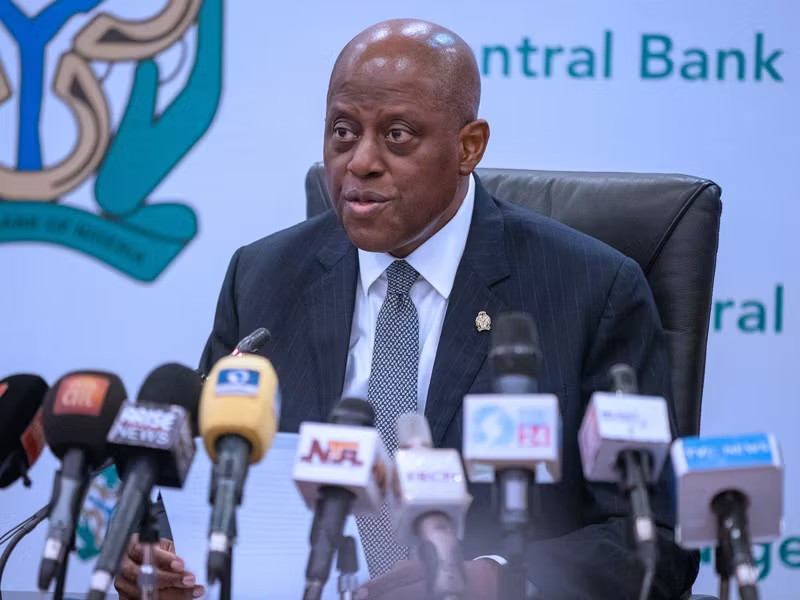
In a landmark update on Nigeria’s fiscal health, Central Bank Governor Olayemi Cardoso revealed that the nation’s net foreign exchange reserves surged from $3.99 billion at the end of 2023 to $34.80 billion by the close of 2025. This 772% increase marks a pivotal turnaround for an economy that has spent years navigating dollar illiquidity and exchange rate instability.
The Significance of the “Net” Recovery
While gross reserves are the most commonly cited figure, analysts prioritize Net International Reserves as a true measure of a country’s financial “firepower.”
-
The Calculation: Net reserves subtract short-term liabilities (like FX swaps and forward contracts) from total assets.
-
The Milestone: By the end of 2025, Nigeria’s net reserves ($34.80B) actually surpassed its gross total from 2023 ($33.22B), signaling a higher quality of capital and fewer encumbrances on the nation’s wealth.
Accelerating Momentum: 2024 to 2026
The buildup has not only been steady but has accelerated in recent months. The CBN data highlights a clear upward trajectory:
| Period | Net Reserves | Gross Reserves |
| End of 2023 | $3.99 Billion | $33.22 Billion |
| End of 2024 | $23.11 Billion | $40.19 Billion |
| End of 2025 | $34.80 Billion | $45.71 Billion |
| Feb 16, 2026 | Ongoing growth | $50.45 Billion |
Between January 1 and late February 2026 alone, reserves grew by an additional 8.56%, underscoring sustained momentum in the new fiscal year.
Drivers of the Rebound: Transparency and Unified Markets
Governor Cardoso attributed this recovery to a “credibility revolution” within the CBN. Key reforms include:
-
Market Unification: Dismantling multiple exchange rate windows to create a single, transparent currency market.
-
Price Discovery: Reducing distortions in how the Naira is priced, which has encouraged foreign direct investment (FDI).
-
Liability Management: Aggressively clearing forward contracts and reducing the central bank’s short-term foreign exchange obligations.
Macroeconomic Implications
For Nigeria—a commodity-dependent exporter—reserve adequacy is the primary shield against global volatility. The current $50 billion gross buffer provides:
-
Enhanced Shock Absorption: Better capacity to defend the Naira during global oil price dips.
-
Debt Service Credibility: Reassuring international creditors and rating agencies of Nigeria’s ability to meet obligations.
-
Import Coverage: Ensuring a multi-month safety net for the country’s essential food and industrial imports.
Conclusion: A Model for the Continent
Nigeria’s aggressive move toward a transparent, market-driven FX system is being watched closely by other African central banks. By prioritizing “quality” reserves over just “headline” numbers, the CBN has significantly reduced the risk of a currency crisis, providing a stable foundation for the private sector to drive the next phase of economic growth.