





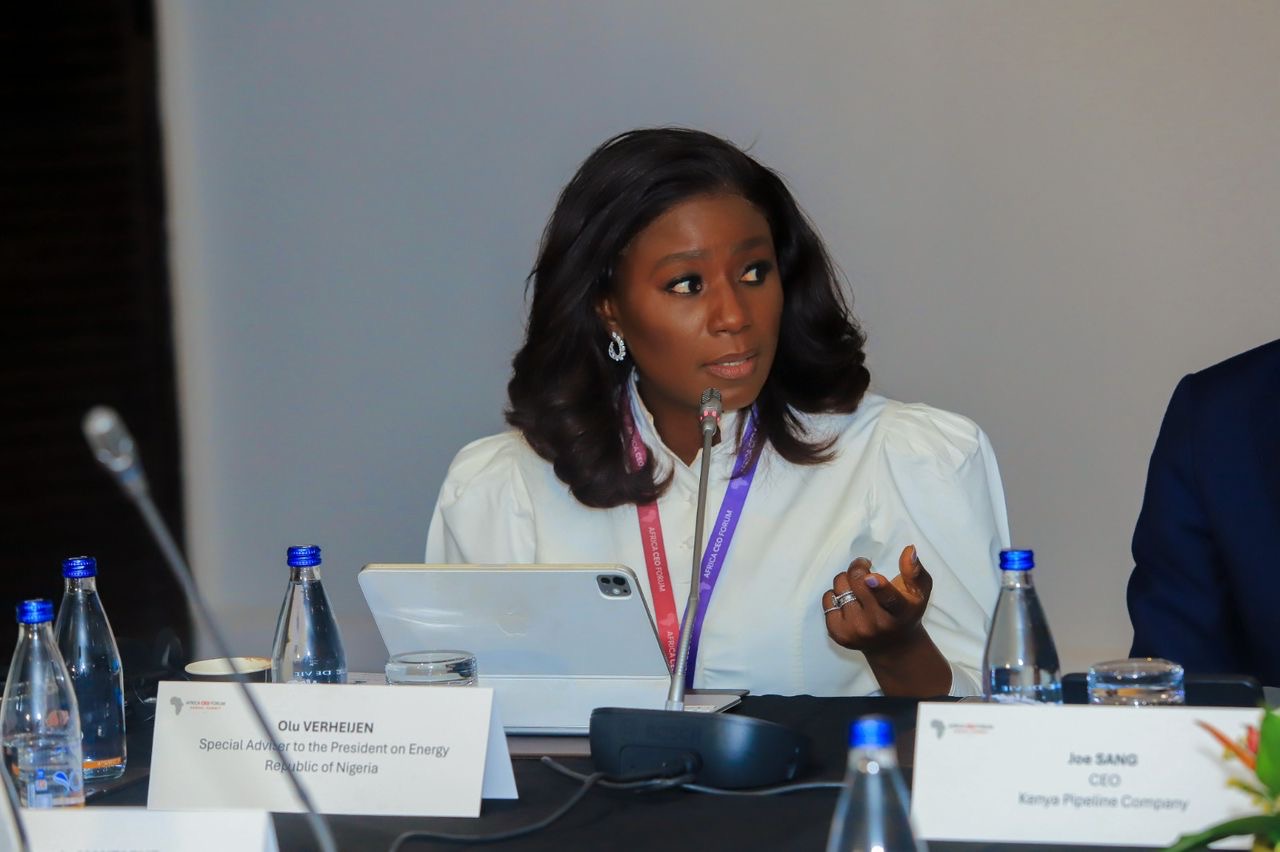
The Nigerian Presidency has revealed that the country attracted more than $8 billion in investments dedicated to deepwater and gas projects over the past year. This milestone was announced by Olu Verheijen, Special Adviser on Energy to President Bola Tinubu, during her speech at the 2025 Africa CEO Forum held in Abidjan, Côte d’Ivoire.
Verheijen credited this surge in investment to key government reforms, including enhanced fiscal policies, streamlined approval procedures, clearer local content regulations, and power sector improvements that have made gas-to-power ventures more commercially viable.
“The Presidency confirms that Nigeria has attracted investments exceeding $8 billion (approximately ₦12.8 trillion) through deepwater projects and gas Final Investment Decisions (FIDs) in just one year,” Verheijen stated at the forum.
She emphasized that the government’s focus on improving tax terms, shortening contracting timelines, clarifying local content rules, and reforming the power sector has been instrumental in creating an investor-friendly environment.
A Call for Africa to Shift from Aid to Investment
Verheijen urged other African countries to transition from dependency on aid to becoming targeted investment hubs by developing clear policies and focused strategies. She pointed to Nigeria as a model example of this transformation — moving from bureaucratic gridlock to a “green light” environment that attracts robust investor interest.
Highlighting a significant achievement, she noted that Nigerian ownership of the country’s gas sector has increased from 69% to 83%, a major step towards empowering Africans with greater control over their energy resources.
She also called on African financial institutions, such as development banks and sovereign wealth funds, to bridge the investment gap left by international oil companies (IOCs) by deploying appropriate tools and risk-sharing mechanisms, beyond just providing capital.
Africa’s Local Strengths and Success Stories
Verheijen pointed out that Africa’s competitive advantage lies in onshore, shallow water, and domestic gas projects, where homegrown companies like Seplat, Oando, and Renaissance Energy are making notable strides.
She also highlighted the Dangote Refinery — the world’s largest single-train refinery — as a testament to African ambition, capital, and talent capable of delivering large-scale projects on the global stage.
The Bigger Picture: Nigeria’s Gas Infrastructure Needs
In a related development, Dr. Ogbonnaya Orji, Executive Secretary and CEO of the Nigeria Extractive Industry Transparency Initiative (NEITI), recently estimated that Nigeria requires $20 billion annually over the next decade to adequately develop its gas infrastructure.
Further supporting this vision, in 2024, Nigeria’s Finance Minister Wale Edun led the approval of the Consolidated Guidelines for Fiscal Incentives in the Oil & Gas Sector — a key presidential directive aimed at boosting Nigeria’s competitiveness in the global energy market and accelerating economic growth.


