






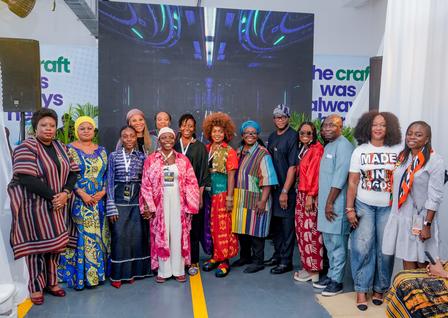
The Lagos State Government, in collaboration with the United Nations Development Programme (UNDP), has launched a joint initiative to scale micro, small, and medium enterprises (MSMEs) within the domestic fashion and leather sectors. Announced during the two-day Fashion, Leather and Creative Enterprise Spotlight at the Senator Oluremi Tinubu Industrial Leather Hub in Mushin, the partnership addresses key structural bottlenecks preventing local artisans from accessing broader international trade channels.
The joint intervention targets specific economic and trade milestones:
-
Capitalizing on Value Retention: Ahunna Eziakonwa, UN Assistant Secretary-General and UNDP Regional Director for Africa, noted that while Africa produces a significant volume of raw hides and skins, it routinely exports them in a raw state, losing out on processing profits. Retaining raw materials locally to manufacture high-end footwear and apparel can increase finished product valuations up to five times. For context, optimizing the domestic value chain could enable Nigeria to produce over 200 million pairs of shoes annually, tapping into an domestic and regional market valued at over $1.4 billion.
-
Dismantling Structural Trade Barriers: Mrs. Toke Benson-Awoyinka, Lagos State Commissioner for Tourism, Arts and Culture, explained that under Governor Babajide Sanwo-Olu’s administration, the state is actively working with the UNDP to remove barriers to regional trade. The strategic blueprint focuses on correcting deficiencies in digital payment infrastructure, intellectual property protection, quality standardization, and regional logistics to help local creators fully leverage the African Continental Free Trade Area (AfCFTA) market.
-
Integrating Regional Supply Chains: To ensure a stable supply of raw materials, Elsie G. Attafuah, UNDP Resident Representative in Nigeria, highlighted the need to link supply chains across individual states. This approach aims to create direct logistics networks connecting livestock producers in Northern states like Kano, Kaduna, and Katsina with specialized finishing hubs and manufacturing facilities in Lagos, reducing the country’s $500 million annual spend on finished leather imports.